Blog

  • Before You Book Kenya, Read This First

    Before You Book Kenya, Read This First

    Here’s the thing about Kenya: people book it wrong all the time.

    Not the safari itself — the experiences are extraordinary regardless of how you plan them. But the weeks of anxiety that precede a Kenya trip? The scramble for a visa that should have been applied for two weeks ago? The packing list that forgets malaria pills and brings hair straighteners? The itinerary that books one park for seven nights and misses four other landscapes entirely? All of that is avoidable. All of it comes from not knowing what to read before you start.

    This is what you should read before you start.

    Whether you’re planning your first African trip or your first specifically Kenyan one, this guide covers everything — visas, vaccinations, budgets, safety, getting around, what to pack, when to go, and the most common mistakes that turn the trip of a lifetime into an unnecessarily stressful experience. It’s built from real planning experience and honest knowledge of what actually matters on the ground.

    By the time you finish, you’ll be ready to book with confidence.

    Step One: Your Kenya eTA — Apply Earlier Than You Think

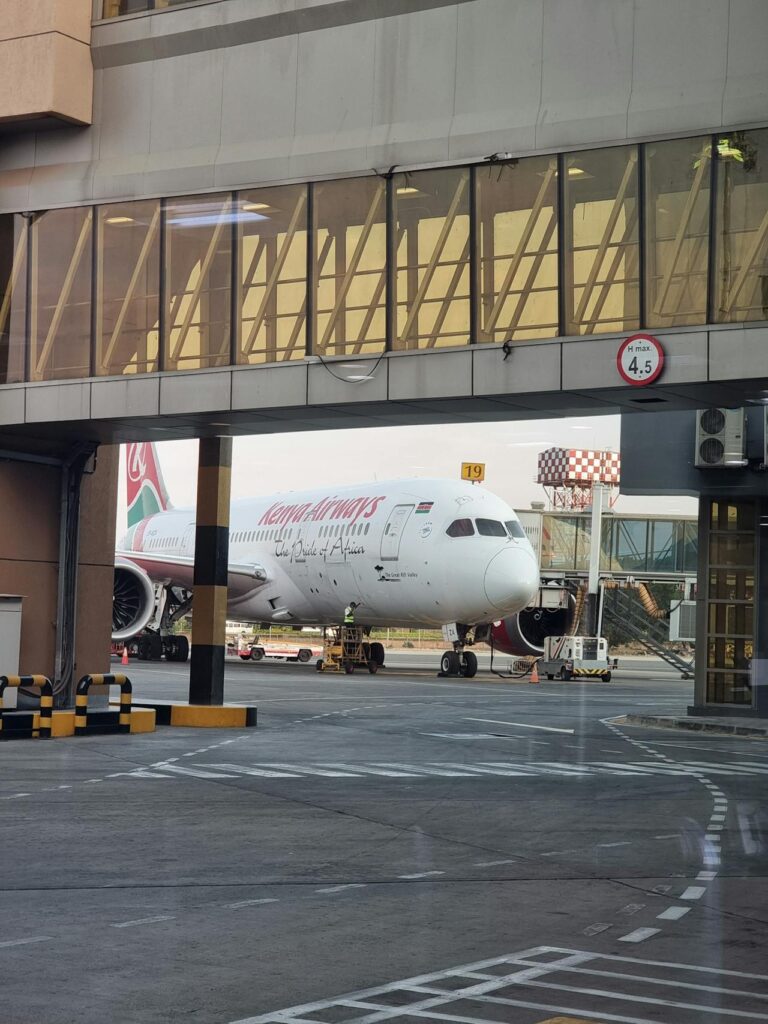
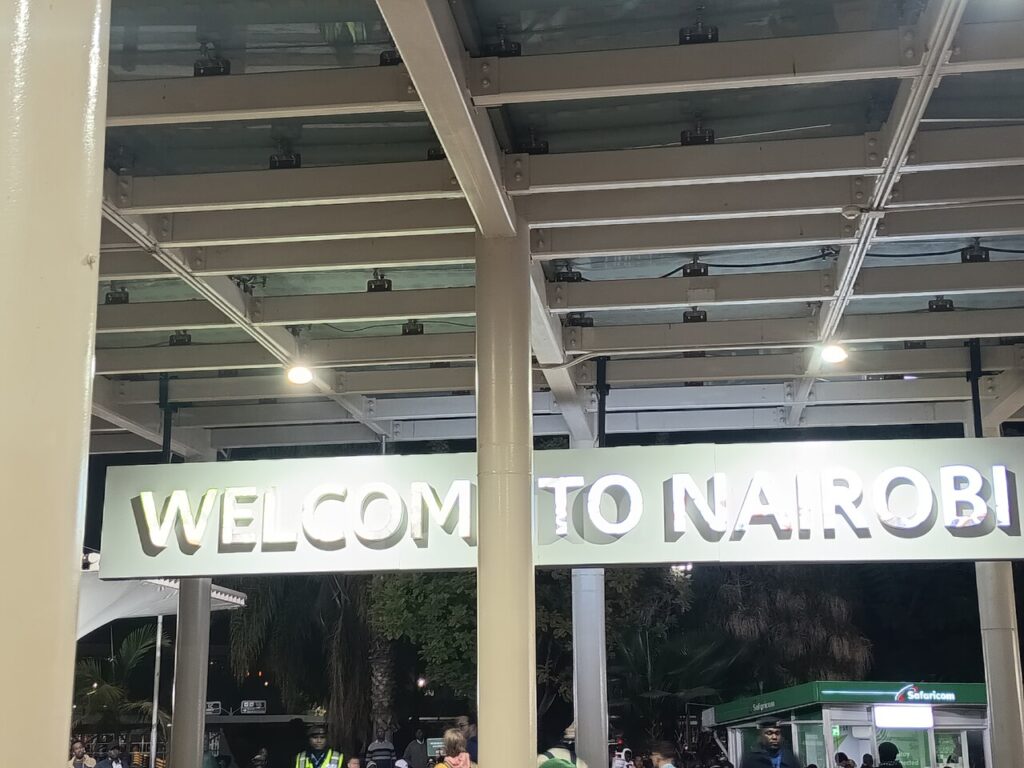
    L’aéroport international de Nairobi.

    The most important administrative task in planning a Kenya trip is sorting your entry authorization. Kenya replaced its eVisa system entirely in January 2024 with a new Electronic Travel Authorisation (eTA) system, and there are a few things about it that catch first-timers out.

    Every international visitor — regardless of nationality, including children and infants — must obtain an approved eTA before boarding any flight to Kenya. There are no visas on arrival. If you land at Jomo Kenyatta International Airport (JKIA) or any other Kenyan port of entry without an approved eTA, you risk being denied boarding at your departure airport or facing penalty fees at the border.

    How to apply: Go directly to the official government portal at etakenya.go.ke — not any third-party site. Third-party sites charge significantly inflated fees for what is a straightforward process you can complete yourself. Create an account, enter your passport details, upload your passport bio-data page, a passport-style photo, proof of return or onward travel, and accommodation details. Pay the processing fee online by card. Done.

    Processing time: The eTA is typically processed within 48–72 hours under normal circumstances. However, peak season applications (particularly July through September, coinciding with the Great Migration) can take significantly longer — and during high-demand periods, delays of up to two weeks have been reported. The practical advice: apply at least two weeks before travel as a standard rule, and aim for a month in advance if your trip falls during July–October.

    What your passport needs: Valid for at least six months beyond your planned entry date, with at least one blank page. This is non-negotiable.

    Citizens of African countries: Most African nationals are now exempt from the eTA requirement and can enter Kenya visa-free for up to two months. All citizens of EAC member states (Uganda, Tanzania, Rwanda, Burundi, South Sudan) can enter with just a valid passport. Citizens of Somalia and Libya still require an eTA due to security considerations — check the official portal for the current country-specific requirements.

    The East African Tourist Visa: If your trip extends to Uganda and Rwanda, consider the East African Tourist Visa — a single multi-country permit valid for all three countries, available through the eTA portal. It is considerably better value than paying separately for each country.

    Yellow fever certificate: If you are arriving from a country classified as having yellow fever transmission risk (this includes much of sub-Saharan Africa, parts of South America, and some other regions), you must carry your international yellow fever vaccination certificate. Without it, you may be refused entry. Check the current list of at-risk countries at the WHO or your national health authority’s website.

    Step Two: Health and Vaccinations — Do This 4–6 Weeks Before Travel

    The single most important medical preparation for Kenya is booking a travel health consultation 4–6 weeks before your departure date. This matter because some vaccinations require multiple doses over several weeks, and malaria prophylaxis needs to start before you arrive in Kenya.

    Here is what the health conversation should cover:

    Malaria Prophylaxis — Non-Negotiable for Most Destinations

    Kenya is a high-risk malaria country across most of its terrain — lowland areas, game parks, the coast, and anywhere below about 2,500 meters above sea level. Nairobi itself sits above this elevation and is generally low-risk, but the Maasai Mara, Amboseli, Tsavo, Samburu, Diani Beach, and most other safari and coastal destinations are decidedly in malaria territory.

    There are three main antimalarials commonly prescribed: atovaquone/proguanil (brand name Malarone), doxycycline, and mefloquine (brand name Lariam). Each has different timing requirements, side effect profiles, and costs. Your travel clinic will advise based on your destinations, medical history, and duration of stay. The critical point: start your course on the schedule your doctor prescribes — not when you arrive in Kenya.

    Pack a good DEET-based insect repellent (minimum 30% DEET, preferably 50%+) and use it every evening without fail. Mosquitoes in Kenya are most active at dawn and dusk. Most safari lodges and camps provide mosquito nets.

    Recommended Vaccinations

    While no vaccines beyond yellow fever are compulsory for entry, the following are strongly recommended and commonly advised for Kenya:

    Hepatitis A — Transmitted through contaminated food and water; advisable for all visitors regardless of accommodation standard.

    Typhoid — Also food and water-borne; particularly relevant if you plan to eat at local restaurants or travel off the beaten track.

    Hepatitis B — Recommended for longer stays, medical workers, or anyone who might receive medical treatment in-country.

    Tetanus/Diphtheria/Polio — Ensure your routine boosters are up to date before any international travel.

    Rabies — Consider this if you’re spending extended time outdoors or in rural areas where animal encounters are possible. Safari parks mean proximity to wildlife; rabies pre-exposure prophylaxis simplifies post-exposure management.

    Meningococcal disease — Recommended for travel to certain areas, particularly relevant during the dry season.

    Your travel clinic will advise based on your specific itinerary and health history.

    Other Health Considerations

    Water: Tap water in Kenya is not reliably safe to drink outside of treated hotel systems. In lodges and reputable hotels, filtered water is generally fine. In rural areas, towns, and anything off the standard tourist circuit, stick to bottled or purified water. Bring a good water bottle with a built-in filter — this is also useful for the plastic bag situation below.

    Sun and altitude: Nairobi sit at approximately 1,660 meters above sea level, and highland areas of Kenya (Aberdares, Mount Kenya region) are significantly higher. Hydrate well on arrival and don’t underestimate UV exposure at altitude. Sunscreen and a hat are daily necessities, not optional.

    Kenya’s strict plastic bag ban: This one catches many travelers by surprise. Kenya implemented one of the world’s strictest single-use plastic bag bans in 2017, and the enforcement is real. Bringing plastic carrier bags into Kenya can result in very serious fines. Before you pack, transfer everything from plastic bags into reusable fabric or clear hard plastic containers. Do not pack shoes in plastic bags or use plastic bags as packing organizers in your luggage — customs officials do check. This is not a theoretical risk. It has caught international visitors.

    Step Three: When Should You Actually Go?

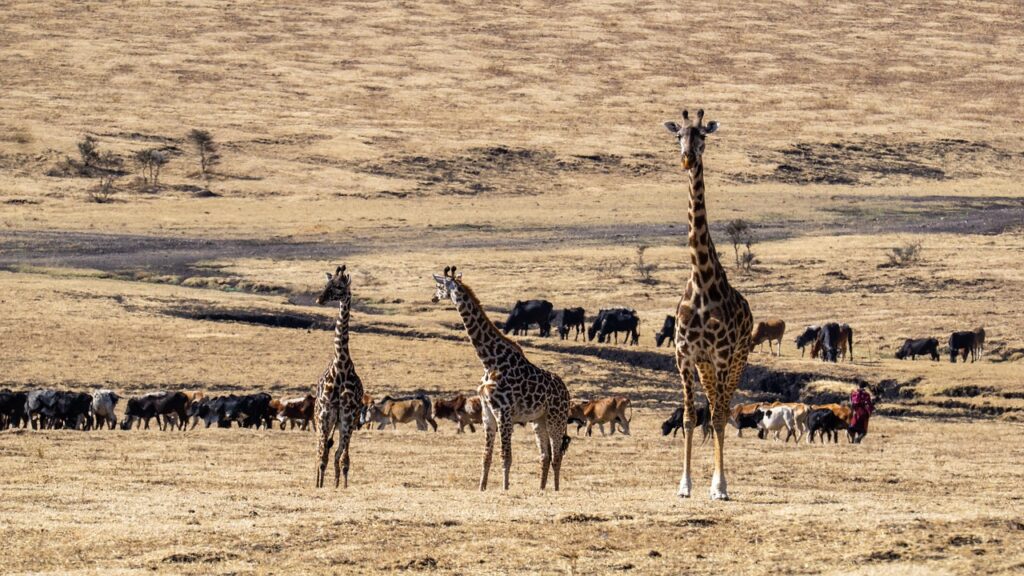
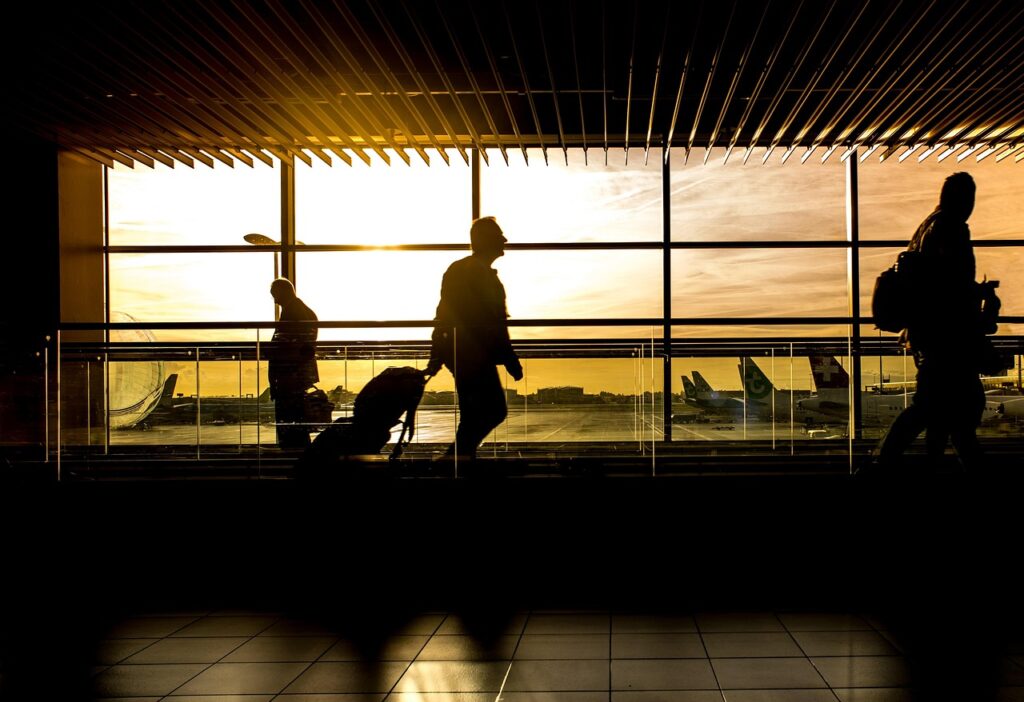
    Image by <a href="https://pixabay.com/users/clickerhappy-324082/?utm_source=link-attribution&utm_medium=referral&utm_campaign=image&utm_content=1822133">Rudy and Peter Skitterians</a> from <a href="https://pixabay.com//?utm_source=link-attribution&utm_medium=referral&utm_campaign=image&utm_content=1822133">Pixabay</a>

    The honest answer is: there is no bad time to visit Kenya. But there are better and worse times depending on what you specifically want to see and experience.

    July–October (Peak Season)

    This is the Great Migration window in the Maasai Mara — the period when wildebeest and zebra are crossing the Mara River in their hundreds of thousands and predator activity throughout the Mara is at its annual apex. Wildlife viewing across Kenya is generally excellent: grass is shorter, animals concentrate around water, and the dry skies produce good photography conditions.

    The trade-off: peak season means peak prices. Accommodation at leading Mara lodges can be extremely difficult to secure for certain windows (particularly late July and August) if booked less than six months in advance. Prices for lodges, camps, and balloon safaris are at their highest. Expect more vehicles at sighting spots, though the best private conservancy operators manage this well.

    Verdict: Best for the Great Migration. Book at least six months ahead for peak July–August dates.

    January–March (Short Dry Season)

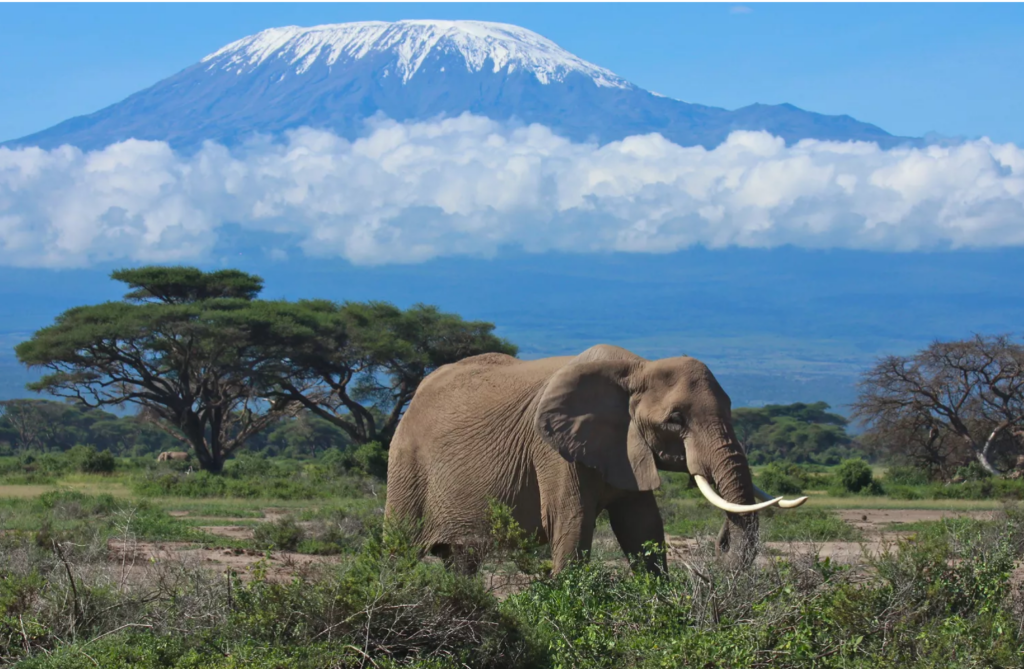
    An excellent alternative — in many ways, one of the most rewarding windows for Kenya travel. The migration has returned to Tanzania’s Serengeti, but resident wildlife populations in the Mara and other parks are concentrated, predators are active year-round, and the landscape is clear and photogenic. Amboseli is at its absolute best for Kilimanjaro views — January and February often produce the clearest conditions of the year.

    Fewer tourists than July–October and meaningfully lower accommodation rates — up to 30–40% off peak-season prices in some cases.

    Verdict: Excellent value, great wildlife, highly recommended for first-timers.

    April–June (Long Rains)

    Kenya’s green season is genuinely beautiful in a different way — lush landscapes, dramatic skies, excellent birdwatching as migratory species arrive, and very few other tourists. Prices drop significantly and some lodges offer exceptional off-season rates.

    The practical downsides: heavy rains can make some roads difficult (particularly in the Mara), certain camps close for maintenance, and the thick vegetation makes wildlife harder to spot. This is a season for photographers who prize light and landscapes over concentrated game viewing.

    Verdict: Best for photographers and budget-conscious travelers. Check road and camp conditions for specific destinations before booking.

    November–December (Short Rains)

    Shorter and less predictable than the long rains. Wildlife remains good, bird life is excellent, and the landscapes retain some green. A sensible window for combining a safari with the Kenyan coast, where the weather is generally warm and pleasant. Prices are competitive.

    Verdict: A good window, particularly for mixed safari-and-beach itineraries.

    Step Four: Understanding Budgets in Kenya

    Budget conversations about Kenya make people anxious, and they shouldn’t — because there is a Kenya for almost every budget tier. What changes is the type of experience, not whether the experience is rewarding.

    The honest framing: Rather than stating specific prices that will inevitably change, here’s how to think about Kenya’s budget tiers and what each one actually delivers.

    Budget safari: Think shared game drives, public campsite or simple tented accommodation, self-organized logistics, and public transport where possible. Kenya is accessible at this level, particularly for younger travelers and those with flexibility. A Nairobi-based day-trip safari to Nairobi National Park, for instance, costs a fraction of a Maasai Mara safari. Hell’s Gate is one of the most rewarding park experiences in the country and among the most affordable. The trade-off is less expert guiding, more time on logistics, and a less intimate wildlife experience.

    Mid-range safari: The sweet spot for many travelers. Mid-range tented camps and permanent lodges, private or small-group game drives, and a mix of self-organized and tour-operator-managed logistics. This tier delivers genuinely excellent experiences in all of Kenya’s major parks. Research your operators carefully — the difference between a competent mid-range operator and a mediocre one is primarily about guide quality.

    Luxury safari: Private lodges, exclusive-use villas, private game vehicles, personalized guiding, helicopter excursions, premium dining and wine. Kenya has some of the world’s finest luxury safari properties — Angama Mara, Mahali Mzuri, Ol Donyo Lodge, andBeyond properties, Segera Retreat. At this tier, the safari experience becomes genuinely transformative in ways that mid-range cannot replicate. The price premium is real and substantial.

    Park fees: These are charged by Kenya Wildlife Service (KWS) and are separate from accommodation and safari costs. They are paid through the eCitizen platform and are denominated primarily in USD for non-residents. Fees vary by park — the Maasai Mara (technically a national reserve, managed by county government) has its own fee structure. Budget for these as a non-negotiable element of your trip cost.

    Balloon safaris: A premium add-on to any Mara safari. Current shared-basket pricing from the two main Mara operators runs in the USD $450–$580 range per person, with some variation by season and operator. This is not cheap — but most travelers who do it describe it as the single best experience of their trip.

    The bottom line on budget: decide what your priorities are, allocate accordingly, and don’t try to do a luxury itinerary on a budget timeline. A focused, well-planned trip at any price point beats a sprawling, rushed one at any other.

    Step Five: Getting into and Around Kenya

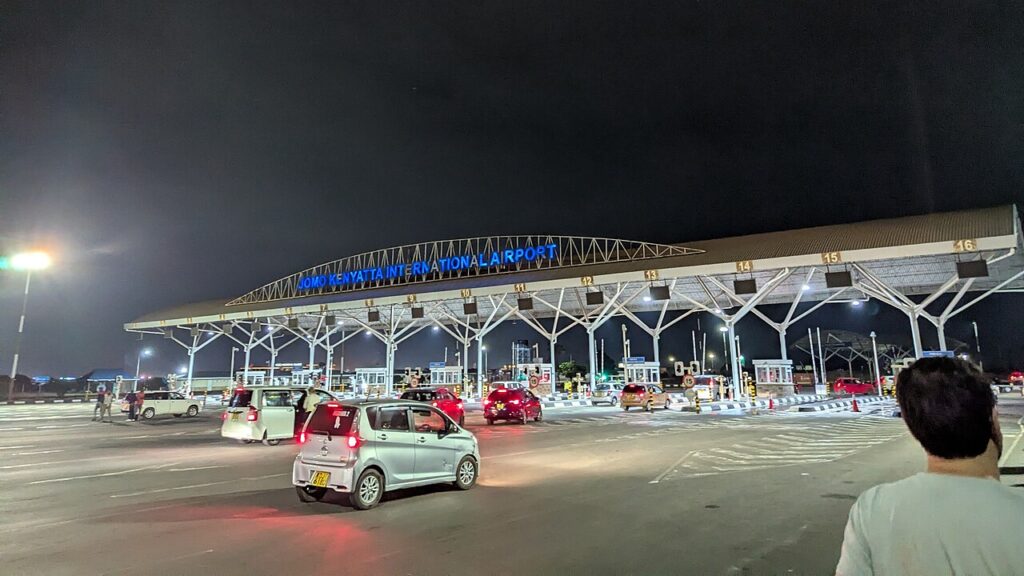
    JKIA

    Arriving at JKIA

    Jomo Kenyatta International Airport (JKIA) in Nairobi is your most likely entry point, handling the majority of international arrivals. It is a large, functional, occasionally busy airport. Allow more time than you think for immigration and customs, particularly on arrival after long-haul evening flights when several international services land simultaneously.

    Have your eTA printed or accessible on your phone. Have your passport, onward ticket, and accommodation details ready for immigration. If you have a yellow fever certificate requirement, have it in hand.

    From JKIA to Nairobi city: Use the Nairobi Expressway (a toll road that bypasses the notoriously congested old airport road) or be met by your hotel or tour operator’s driver. The old Airport Road (Airport South Road) carries a higher carjacking risk — avoid it. Uber and Bolt work well from the airport but use the official app and confirm your driver before entering any vehicle.

    Getting Around Kenya

    Domestic flights are the correct answer for moving between Nairobi and distant safari parks. Wilson Airport (a small domestic airport about 6km from the city center, not JKIA) is the main hub for domestic charter and scheduled flights. SafariLink, AirKenya, and Jambojet all operate scheduled routes. Wilson to the Maasai Mara takes about 45 minutes. Wilson to Samburu, around an hour. The time and energy saved by flying rather than driving is enormous on a limited trip.

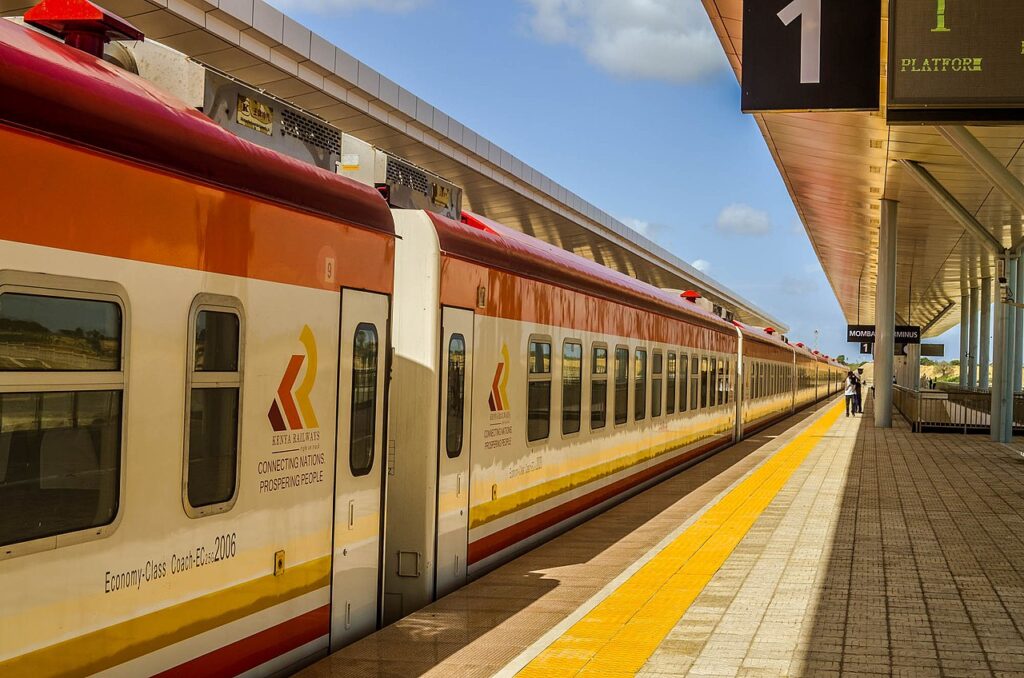
    The Madaraka Express SGR train runs between Nairobi (Syokimau station) and Mombasa. It’s comfortable, reliable, and a genuinely enjoyable journey — far better than the old overnight train and much less stressful than driving. If your itinerary includes both Nairobi and the coast, this is your transport.

    Uber and Bolt work throughout Nairobi and in Mombasa. Always book through the app, confirm the vehicle registration before entering, share your trip details with someone, and avoid accepting unmarked taxis from the street.

    Private driver-guides are standard for multi-day safaris and are usually arranged through your tour operator. A good guide is one of the most important variables in your safari quality. Don’t scrimp on this.

    Matatus (minibus shared taxis) are how most Kenyans travel between towns. They are cheap and ubiquitous. They are also frequently overcrowded and driven with enthusiasm that outpaces caution. Use them for short urban trips if you’re comfortable with the pace of Nairobi traffic, but avoid them for long inter-city journeys where the safety record is mixed.

    Connectivity and Money

    SIM cards: Buy a Safaricom SIM at the airport or any Safaricom shop in Nairobi. Safaricom has by far the best network coverage in Kenya, including in most national parks and along major safari routes. Data packages are inexpensive. This is genuinely important for navigation, communication, and Uber — get a local SIM on day one.

    Alternatively, pick up a travel eSIM (like Hello eSIM or similar services) before you leave home if you’d prefer not to deal with a physical SIM.

    M-Pesa: Kenya’s mobile money system is one of the most sophisticated in the world. Most Kenyans use it for everything. As a tourist, having a Safaricom SIM allows you to top up and use M-Pesa for paying park fees on the eCitizen platform, tipping guides, and paying at local markets. It is extraordinarily convenient once set up.

    Cash and cards: Credit cards (Visa, Mastercard) are accepted at major hotels, lodges, and restaurants in cities and tourist areas. Cash in Kenyan Shillings (KES) is useful for smaller purchases, local restaurants, and tips. USD is widely accepted at safari camps and lodges but always at a less favorable rate than paying in KES — exchange some money at a bureau de change on arrival for day-to-day expenses.

    Step Six: Safety — Honest Guidance for Real Conditions

    Kenya is a safe destination for tourists in its major safari areas, beach destinations, and established tourist neighborhoods. The UK Foreign Office, US State Department, and Australian Smartraveller all maintain advisories for Kenya — not because Kenya is uniquely dangerous, but because every country receives a nuanced assessment.

    Here is the practical, honest picture:

    The safari parks are safe. The Maasai Mara, Amboseli, Tsavo, Samburu, Nakuru, Naivasha — these are all safe for tourists. The wildlife is, of course, wild, which is why you follow your guide’s instructions without question. But the infrastructure is well-established, park security is strong, and millions of visitors travel these circuits without incident every year.

    Nairobi requires city-standard awareness. Karen, Westlands, Gigiri, Kilimani, and Lavington are Nairobi’s established tourist-friendly neighborhoods — safe, well-lit, with good restaurants, hotels, and facilities. Exercise the same awareness you would in any major city: don’t display expensive electronics, don’t walk alone at night, use Uber rather than street taxis after dark, and keep your phone in your pocket in busy public spaces.

    Avoid: Eastleigh and parts of Kibera within Nairobi. Areas near the Kenya-Somalia border (Garissa, Wajir, Mandera counties) — the US government prohibits official travel there, and the UK and Australian advisories are equally firm. Lamu and coastal areas north of Malindi require extra vigilance; if visiting Lamu Island, fly there rather than driving through Lamu County.

    Do not wear camouflage clothing. In Kenya, camouflage is illegal for civilians. Airport security and police will notice. This catches tourists off guard more often than you’d expect.

    Demonstrations and protests occur periodically in Nairobi, particularly around political and economic flash points. Monitor local news (Nation Africa and The Standard are reliable) and be prepared to adjust plans if protests are expected on routes you planned to use.

    Step Seven: What to Pack

    This is where most first-timers overthink things. Here’s what actually matters:

    For safaris: Neutral colors only — khaki, olive, tan, grey, beige, cream. Dark colors and black attract tsetse flies (painful biters found in many parks). Bright colors scare wildlife and look ridiculous in photographs. Layers are essential: early-morning game drives in the Mara can be genuinely cold, while midday temperatures are very warm.

    Closed-toe shoes for game drives and walks. Sandals for the camp and lodge. Sturdy boots if you’re doing any walking safaris or hiking.

    Camera and binoculars. A good pair of binoculars will change your safari experience more than any camera upgrade. For photography, a telephoto zoom (200mm+ on a full frame) is ideal for wildlife.

    For the coast: Pack light. Sarongs or wraps for mosque visits or coastal towns. Rash guards and reef-safe sunscreen for snorkeling.

    Reusable water bottle — absolutely essential given the plastic bag situation. A LifeStraw bottle or similar filtered bottle means you can fill from camp sources safely.

    Power adapters: Kenya uses UK-style three-pin plugs (Type G). Bring an adapter.

    Prescription medications: In a proper, sealed, labelled container. Bring a copy of the prescription. Kenya’s pharmacy infrastructure outside major cities can be limited.

    Step Eight: The Most Common First-Timer Mistakes

    Leaving the visa too late. Apply two weeks minimum before travel, aim for a month during peak season.

    Under-estimating transfer times. Nairobi traffic is serious. Allow two to three hours for an JKIA transfer during rush hour (7–9am, 5–7pm) when connecting to domestic flights from Wilson Airport.

    Booking too many parks on a short trip. It is better to spend three nights in one excellent location than one night in three rushed ones. Quality over quantity.

    Skipping travel insurance. Medical evacuation from a remote safari park can cost tens of thousands of dollars. Comprehensive travel insurance including medical evacuation cover is non-negotiable. Do not arrive in Kenya without it.

    Ignoring the plastic bag rule. See above. This is real.

    Not tipping guides and camp staff. Tipping is not obligatory but is important in Kenya’s hospitality culture, particularly for safari guides who are central to the quality of your experience. Ask your operator for current tipping guidelines — they’ll provide clear expectations.

    Buying souvenirs with wildlife products. Do not purchase anything made from ivory, tortoiseshell, certain feathers, or other wildlife products. You will not be able to bring them home legally, and buying them supports the poaching trade.

    The Last Word

    Kenya rewards those who plan properly and absolutely forgives those who don’t plan perfectly. The country is warm, the people are remarkable, the wildlife is incomparable, and the variety of experiences — from the Maasai Mara’s drama to Diani’s beaches to the Rift Valley’s volcanic lakes to western Kenya’s rainforest — is unlike anywhere else on earth.

    Do the eTA early. See a travel clinic six weeks before you leave. Pack neutrals. Bring binoculars. Leave the plastic bags at home. And then get on the plane.

    At Travel Discover Kenya, we’ve helped hundreds of first-time visitors navigate exactly this process — from visa questions at midnight to helping decide between three weeks of competing destinations. We know Kenya because we work in it every day, and we’re here to make your planning as straightforward as the experience will be extraordinary.

    Ready to start planning? Request a free Kenya planning consultation from these trusted tours and travel agencies. They’ll walk you through everything to start building your 2026 itinerary.

  • Nairobi Eats Different – Here’s Where the City Takes Its Meals

    Nairobi Eats Different – Here’s Where the City Takes Its Meals

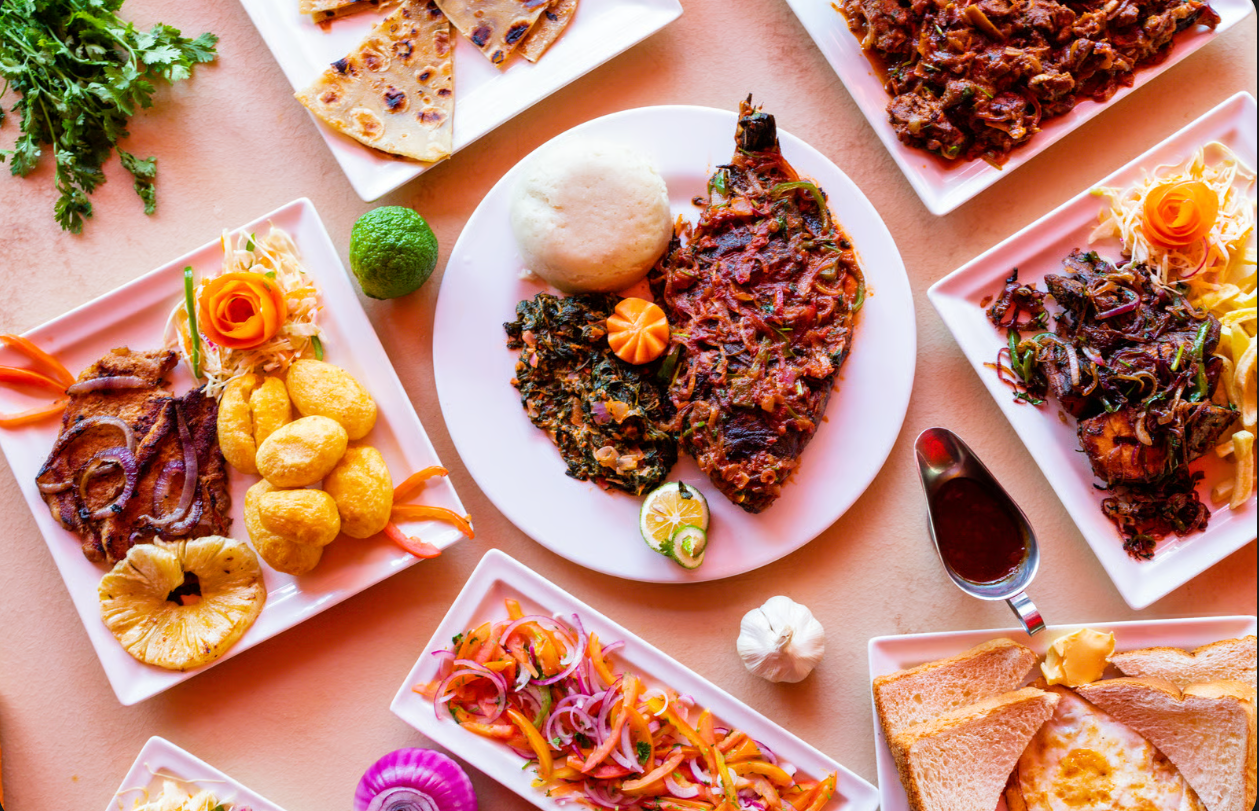
    Nairobi is not just Kenya’s capital city – it is a living, breathing food map where cultures collide, traditions blend, and flavors evolve in real time. If you think you’ve “eaten in Nairobi,” think again. The city doesn’t serve food in a single style or identity. Instead, it shifts depending on where you are, who you’re with, and even what time of day it is.

    From smoky street grills in the Central Business District to upscale fusion dining in leafy suburbs, Nairobi truly eats different. Every neighborhood tells a story through food, and every meal feels like a discovery.

    In this guide, we explore where the city takes its meals, and why Nairobi’s food culture is one of the most dynamic in East Africa.

    Nairobi: A City Built on Food Diversity

    At the heart of it all is Nairobi, a city shaped by migration, trade, and cultural exchange. Over time, communities from across Kenya and beyond have brought their culinary traditions into the city, creating a food scene that is both deeply local and surprisingly global.

    In Nairobi, you don’t just eat to get fully – you eat to connect. You connect with heritage, with street culture, with innovation, and sometimes even with luxury dining experiences that rival global capitals.

    What makes Nairobi’s food culture special is its layering. You can have breakfast from a roadside kibanda, lunch in a corporate café, and dinner in a rooftop restaurant – all within a few kilometers of each other.

    1. CBD: Where Street Food Rules the Day

    The Central Business District (CBD) is where Nairobi’s food energy is loudest and fastest. During the day, office workers, traders, and commuters fuel up on quick, affordable meals.

    Here, food is practical but never boring.

    What you’ll find:

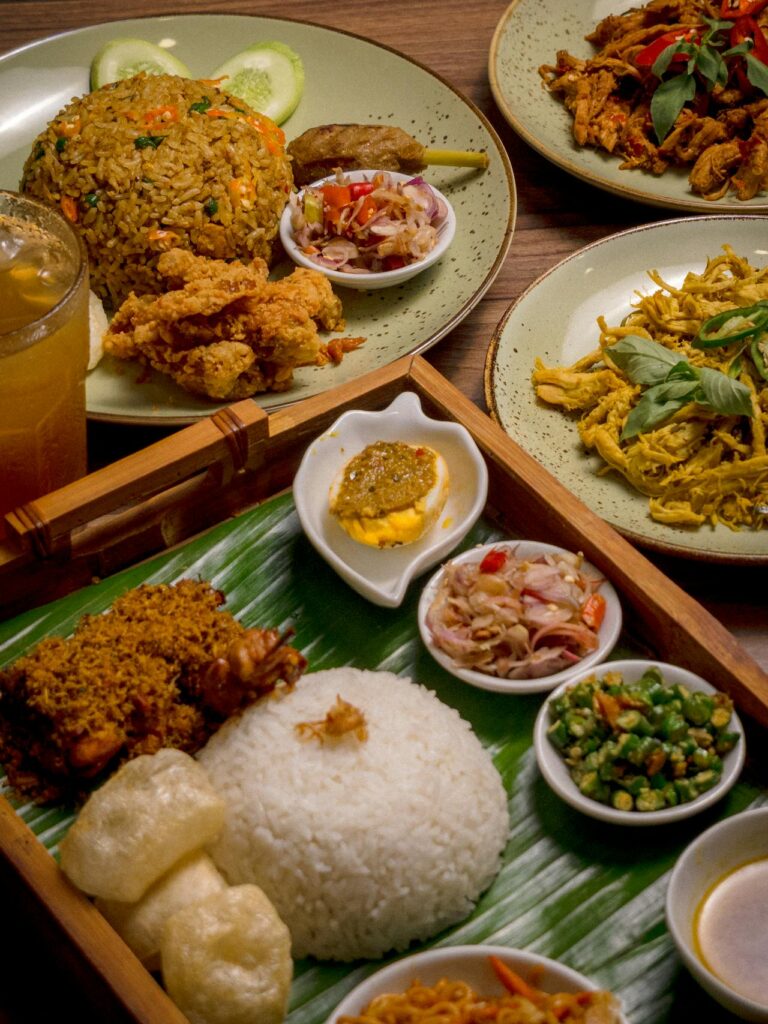
    • Smoky grilled meat (nyama choma on the go)
    • Chapati wraps filled with beans, eggs, or beef
    • Samosas, mandazi, and roasted maize
    • Quick soda-and-sausage combos from street vendors

    The CBD is where Nairobi proves that great food doesn’t need fine dining. It just needs fire, flavor, and speed.

    2. Westlands: The City After Dark

    Move a few kilometers west and you land in Westlands – a district that completely changes the mood of eating in Nairobi.

    If the CBD is about survival and speed, Westlands is about experience.

    At night, this area transforms into a buzzing culinary and nightlife hub. Restaurants glow, grills smoke, and music fills the air.

    Food culture here includes:

    • High-end steakhouses and grill houses
    • Pan-Asian cuisine and sushi spots
    • Trendy cafés and dessert lounges
    • Late-night bites after clubbing

    Westlands is where Nairobi shows off. It’s polished, modern, and always evolving.

    Discover Best Restaurants in Nairobi Here

    3. Kilimani: The Global Fusion Zone

    If Nairobi had a “global food melting pot,” it would be Kilimani.

    Kilimani is where international residents, young professionals, and creatives come together to eat without borders. The result? A food scene that borrows freely from everywhere.

    Expect:

    • Ethiopian injera platters next to Korean BBQ
    • Vegan cafés and smoothie bars
    • Mediterranean wraps and Indian curries
    • Artisan coffee shops with minimalist aesthetics

    Kilimani is less about tradition and more about experimentation. It’s where Nairobi’s food scene gets its global passport.

    4. Eastleigh: Bold Flavors and Big Portions

    In Eastleigh, food is generous, bold, and deeply rooted in Somali and East African culinary traditions.

    This area is famous for its hospitality-driven food culture where sharing is the norm and portions are never small.

    Signature food experiences:

    • Spiced rice dishes like pilau and biryani
    • Suqaar (spiced meat stir-fry)
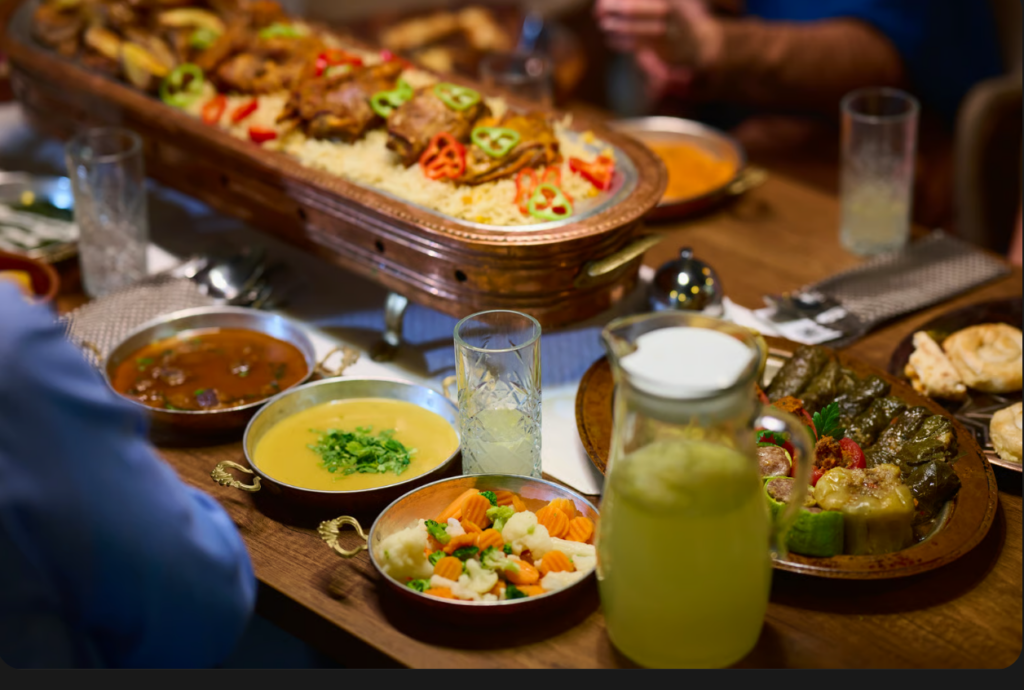
    • Fresh juices and sweet tea
    • Large platters meant for sharing

    Eastleigh is where food feels like family. It’s vibrant, fast-paced, and deeply communal.

    5. Karen: Slow Dining in Green Spaces

    In contrast to Nairobi’s busy core, Karen offers a completely different food experience – slow, scenic, and relaxed.

    Here, meals are not rushed. They are enjoyed.

    What defines Karen’s food scene:

    • Farm-to-table restaurants
    • Organic and health-focused menus
    • Garden cafés surrounded by greenery
    • Weekend brunch culture

    Karen is where Nairobi goes to breathe. Dining here often feels like a retreat rather than a routine meal.

    6. Kibera and the Real Street Food Economy

    In Kibera, one of Africa’s largest urban settlements, food culture is rooted in resilience, creativity, and affordability.

    Here, food is not a luxury – it is survival, community, and innovation combined.

    Common foods include:

    • Ugali with sukuma wiki (collard greens)
    • Fried fish and roasted meat
    • Chapati and beans sold in small kiosks
    • Local snacks prepared fresh daily

    What stands out in Kibera is how food vendors adapt constantly – offering affordable meals that still feel hearty and satisfying.

    7. Nairobi’s Café Culture: Where Coffee Meets Creativity

    Beyond neighborhoods, Nairobi has developed a strong café culture that connects remote workers, students, and creatives.

    Across the city, cafés have become:

    • Workspaces
    • Social hubs
    • Meeting points
    • Creative studios

    From artisanal coffee to locally sourced blends, Nairobi’s café scene has grown into one of the most exciting parts of its food identity.

    8. The Influence of Kenyan Cuisine

    No matter how global Nairobi becomes, Kenyan food remains the backbone of its culinary identity.

    Staples like:

    • Ugali
    • Nyama choma
    • Sukuma wiki
    • Githeri
    • Pilau

    …are still widely eaten across the city.

    What’s interesting is how these dishes evolve. In modern Nairobi, you’ll find gourmet versions of traditional meals served in upscale restaurants, proving that heritage and innovation can sit on the same plate.

    9. Street Food: The Heartbeat of the City

    If you really want to understand Nairobi’s food identity, start with the street.

    Street food in Nairobi is:

    • Accessible
    • Fast
    • Affordable
    • Deeply cultural

    From sunrise to late night, vendors keep the city fed. It’s not just food—it’s a system that supports thousands of livelihoods daily.

    10. Why Nairobi Truly “Eats Different”

    So what makes Nairobi’s food culture stand out?

    1. It changes by neighborhood: Every area has its own food identity.

    2. It blends tradition and modernity: Old recipes meet new techniques.

    3. It reflects diversity: Dozens of cultures contribute to what the city eats daily.

    4. It’s always evolving: New restaurants, pop-ups, and street trends appear constantly.

    5. It serves every budget: From luxury dining to roadside snacks, no one is left out.

    Final Thoughts: A City That Eats Like It Lives

    Nairobi doesn’t follow one food story – it writes many at once. In a single day, you can experience street-side roasting, global fusion dining, home-style comfort food, and experimental café culture.

    That’s what makes it special.

    To eat in Nairobi is to understand the city itself: fast, diverse, unpredictable, and full of flavor.

    So the next time you think about Nairobi food, don’t ask what’s on the menu – ask where in the city you are eating.

  • Wildebeest Migration: Why It Doesn’t Wait for No One

    Wildebeest Migration: Why It Doesn’t Wait for No One

    Every year, without a calendar, without a forecast, and without a single human cue, over 1.5 million wildebeest begin moving. They surge across the Serengeti-Mara ecosystem in a thundering, unstoppable loop that has repeated itself for millennia. No drought has stopped it. No predator has halted it. No border has redirected it. The Great Wildebeest Migration is nature’s most powerful reminder that some things simply cannot wait – and nothing, absolutely nothing, gets in the way.

    What Is the Great Wildebeest Migration?

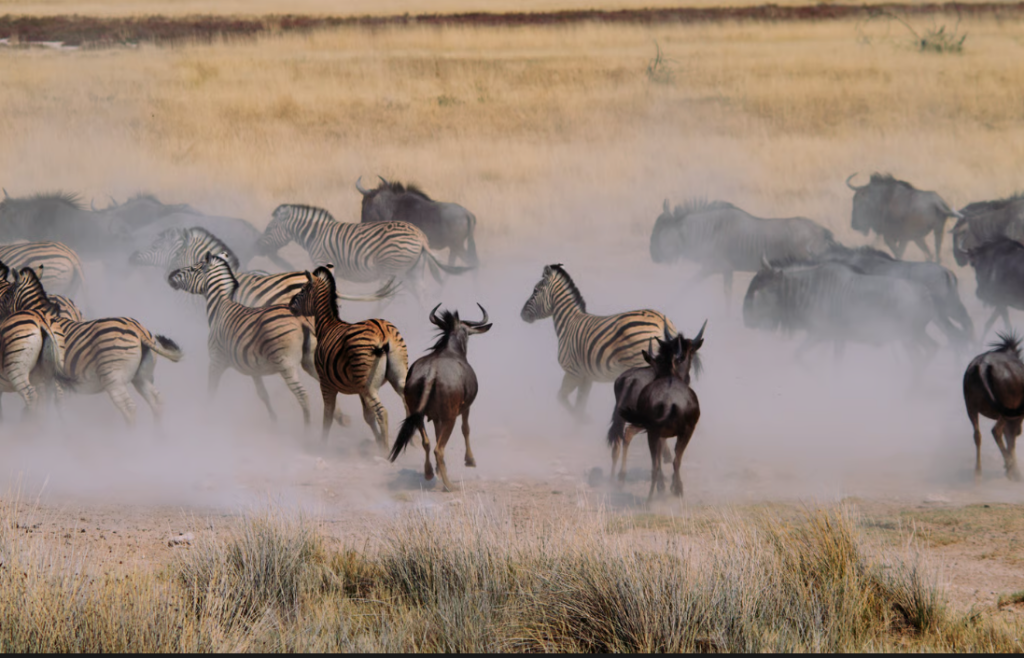
    The Great Wildebeest Migration is the largest overland animal migration on the planet. It takes place across Tanzania’s Serengeti National Park and Kenya’s Masai Mara National Reserve – a combined ecosystem stretching over 30,000 square kilometers. The migration involves approximately 1.5 million wildebeest, accompanied by around 400,000 zebras and 200,000 Thomson’s gazelles.

    This is not a one-time event. It is a continuous, year-round cycle driven by one singular need: grass. The animals follow the rains, chasing the fresh green pastures that spring up across the ecosystem in a seasonal pattern. They don’t rest. They don’t settle. They move, always.

    The Science Behind the Movement

    So what triggers the migration? The short answer is rain and grass. But the longer answer reveals something far more astonishing: wildebeest appear to detect rain from distances of up to 50 kilometers. Scientists believe they respond to the sight of distant storm clouds and the smell of wet earth carried by wind.

    The Serengeti-Mara ecosystem experiences a predictable rainfall pattern. The short rains arrive around November, and the long rains follow between March and May. As the rains shift, so does the lush, nutritious grass that wildebeest depend on. Their movement is essentially a living compass, always pointing toward food.

    There is also a remarkable synchrony in their calving season. Nearly 500,000 wildebeest calves are born within a 2–3 week window in February, primarily in the Ndutu region of the southern Serengeti. This is not coincidence – it is evolutionary strategy. By flooding the ecosystem with newborns all at once, predators are overwhelmed and the chances of individual survival skyrocket. Nature, it turns out, understands math.

    The Annual Route: A Clockwise Journey of Survival

    The migration follows a roughly clockwise circuit through the ecosystem. Here is how the year unfolds:

    January – March: The Southern Serengeti and Ndutu Plains

    The herds gather in the short-grass plains of the southern Serengeti, where calving takes place. The flat, open terrain offers visibility – mothers can spot predators, and the nutrient-rich volcanic soil produces grass packed with minerals essential for nursing calves.

    April – May: Moving North Through the Central Serengeti

    As the long rains arrive and the southern pastures dry out, the herds begin their northward push through the central and western Serengeti, passing through the Grumeti River area. The Grumeti is the first major river crossing of the year – and the Nile crocodiles there are waiting.

    June – July: The Western Corridor and Grumeti Crossing

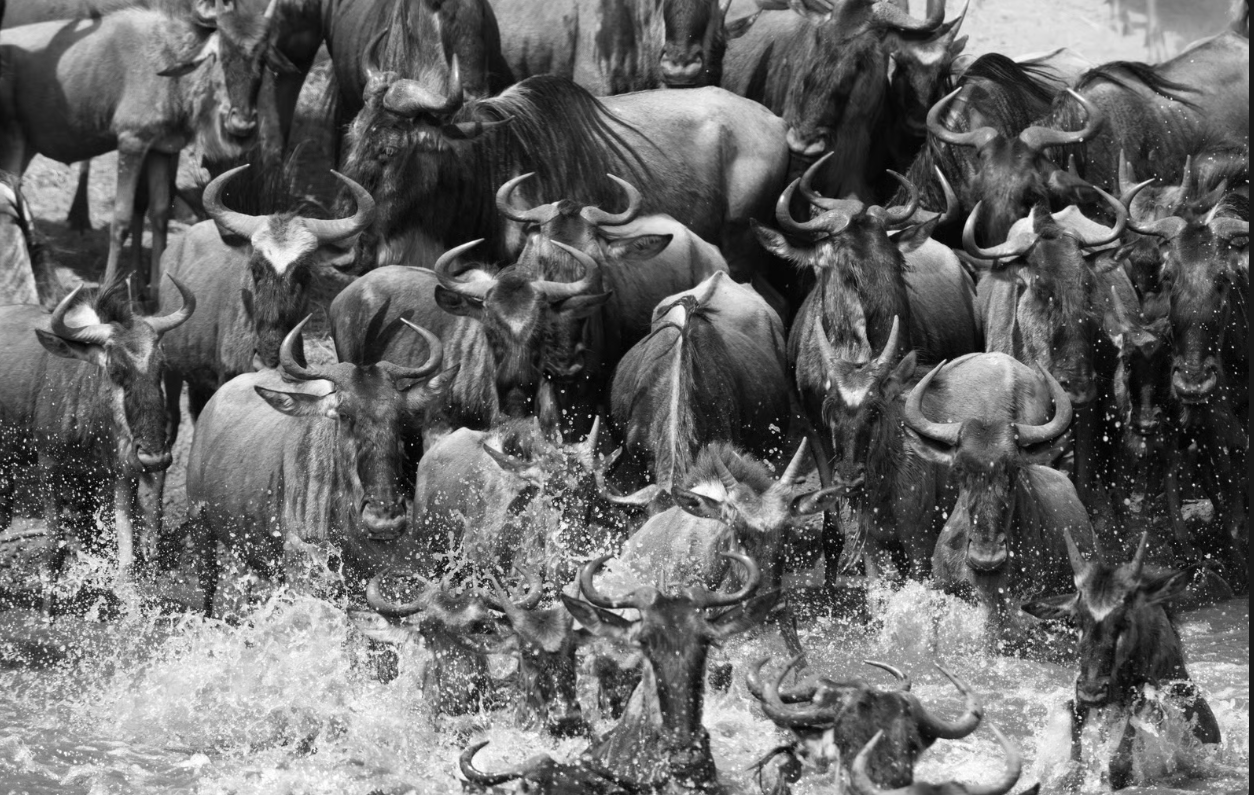
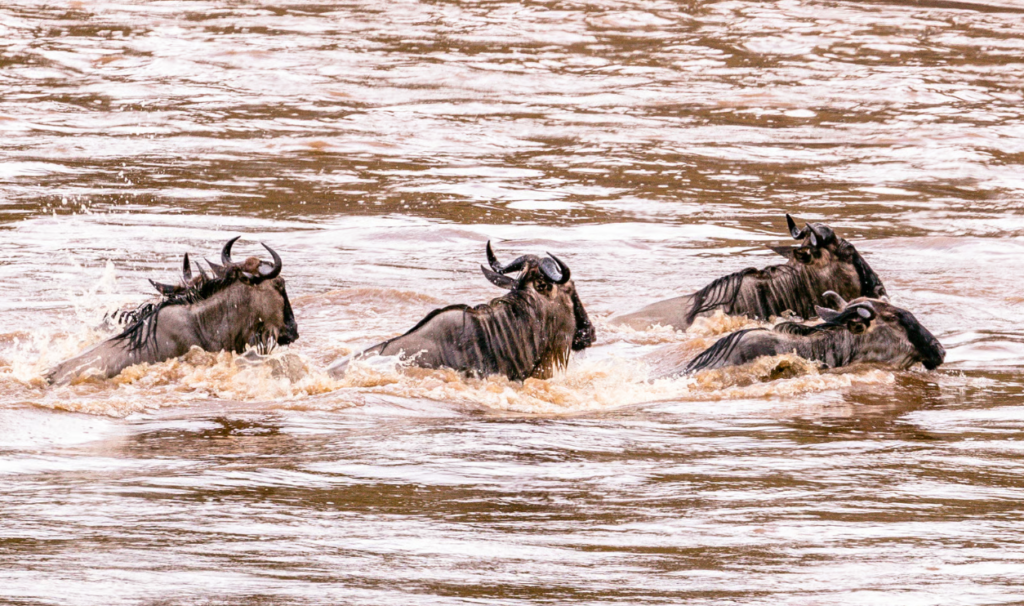
    The dramatic Grumeti River crossings captivate photographers and wildlife enthusiasts every year. Thousands of animals plunge into crocodile-infested waters, driven forward by the primal pressure of the herd behind them. Many don’t make it. The ones that do push onward.

    July – October: The Masai Mara and the Mara River Crossings

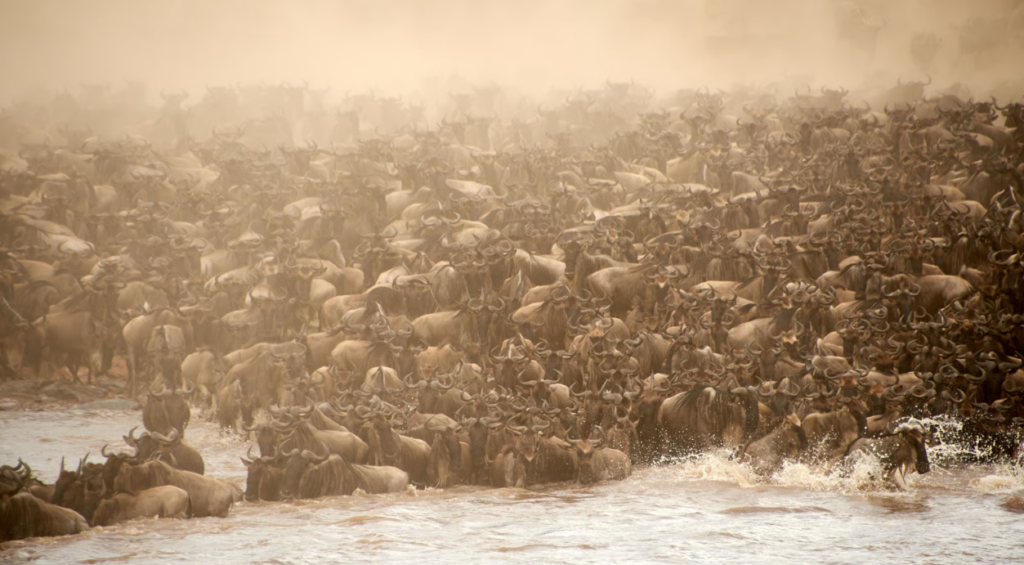
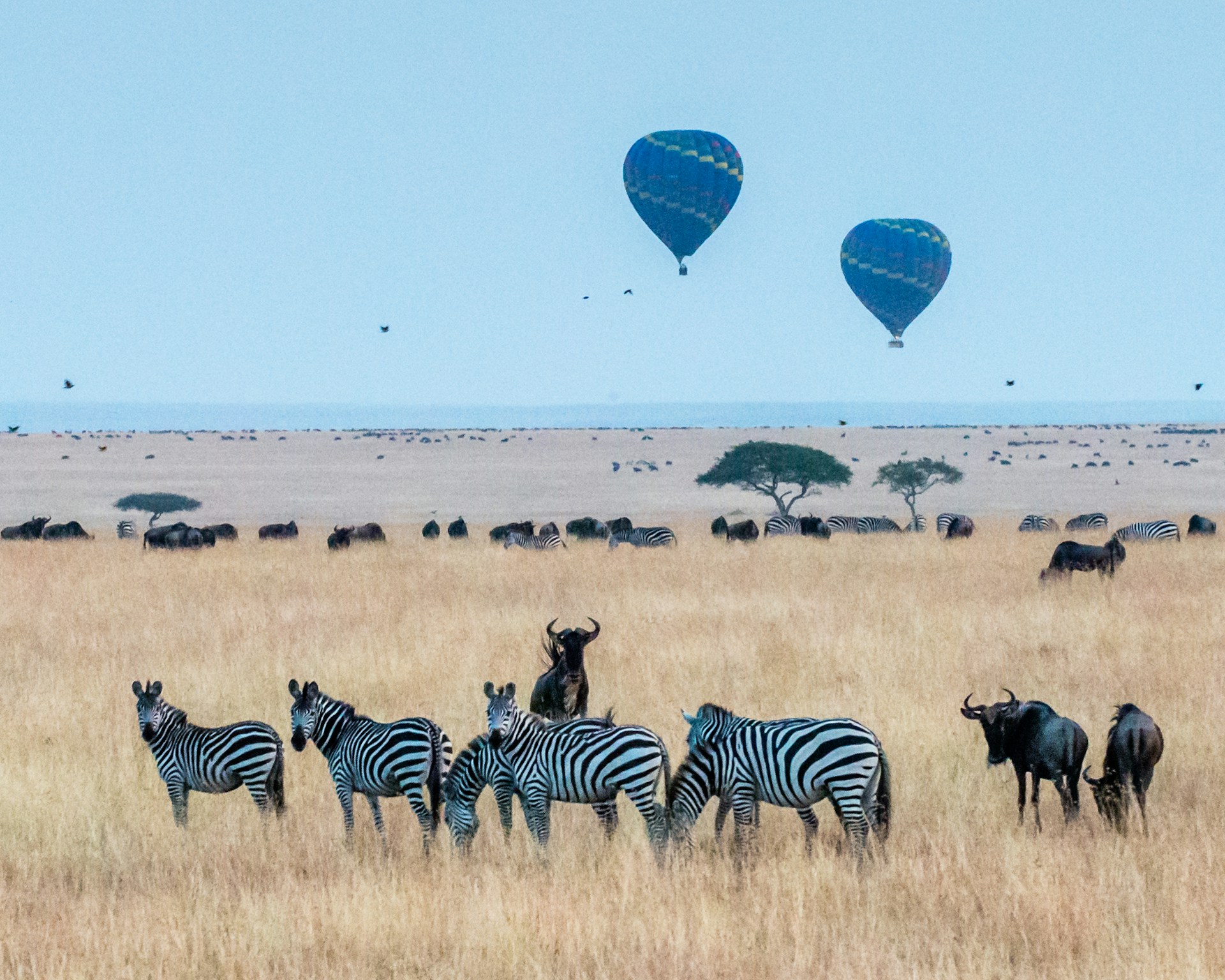
    This is the moment most people picture when they think of the migration – the Mara River crossings. The herds pour into Kenya’s Masai Mara, where the Mara River presents the most treacherous obstacle of the entire journey. Steep banks, powerful currents, and enormous Nile crocodiles create scenes of raw, unfiltered survival. Lions, cheetahs, and hyenas are also in full force along the riverbanks.

    The crossings are unpredictable. The wildebeest may attempt a crossing, panic, turn back, and try again days later. Or they may surge across in a frenzied mass that stains the water red. There is no predicting exactly when they will cross – only that they will.
    November – December: The Return South

    As the short rains begin to fall on the Serengeti once more, the herds begin their return journey southward, completing the loop and beginning the cycle again.

    Why It Doesn’t Wait

    The title of this article is not dramatic flair. It is ecological fact.

    The wildebeest migration operates on biological and environmental triggers that override every external factor. Drought, human encroachment, disease, predation – none of these stop the migration. They may alter it slightly, delay it briefly, or reduce numbers over time, but the movement itself persists.

    This is because stopping would mean death. An individual wildebeest that refuses to follow the herd faces starvation, predation, and isolation. The collective movement is not a choice – it is the only viable survival strategy the species has developed over millions of years of evolution.

    The migration has continued through political instability, border changes, drought years, and even during periods of significant poaching pressure. The ecosystem has endured all of it. Because wildebeest, fundamentally, do not have the option to wait.

    Best Tour Guides in Kenya

    Threats to the Migration

    Despite its resilience, the migration is not invincible. Several modern pressures threaten its long-term integrity:

    1. Human Settlement and Agriculture: As human populations grow around the Serengeti-Mara ecosystem, traditional migration corridors are being blocked by farmland and settlements. When wildebeest can no longer move freely, the ecological balance of the entire system breaks down.

    2. Climate Change: Shifting rainfall patterns are disrupting the seasonal grass cycles that drive the migration. Unpredictable rains mean unpredictable grass — and unpredictable grass means the herds may move earlier, later, or in altered directions that put them in conflict with human land use.

    3. Infrastructure Development: Proposed roads and fences cutting through the Serengeti have been the subject of fierce conservation debates. Even a single major road through a key migration corridor can fragment the herd and cause massive population crashes.

    4. Poaching: While large-scale commercial poaching of wildebeest is less prevalent than for species like elephants and rhinos, illegal snare hunting along migration routes kills thousands of animals annually.

    Conservation organizations, governments, and local communities are working to protect the ecosystem – but the work is urgent.

    Why the Migration Matters Beyond the Spectacle

    It is easy to frame the Great Migration as pure spectacle – and it is, without question, one of the most extraordinary sights on Earth. But its ecological importance goes far beyond tourism and photography.

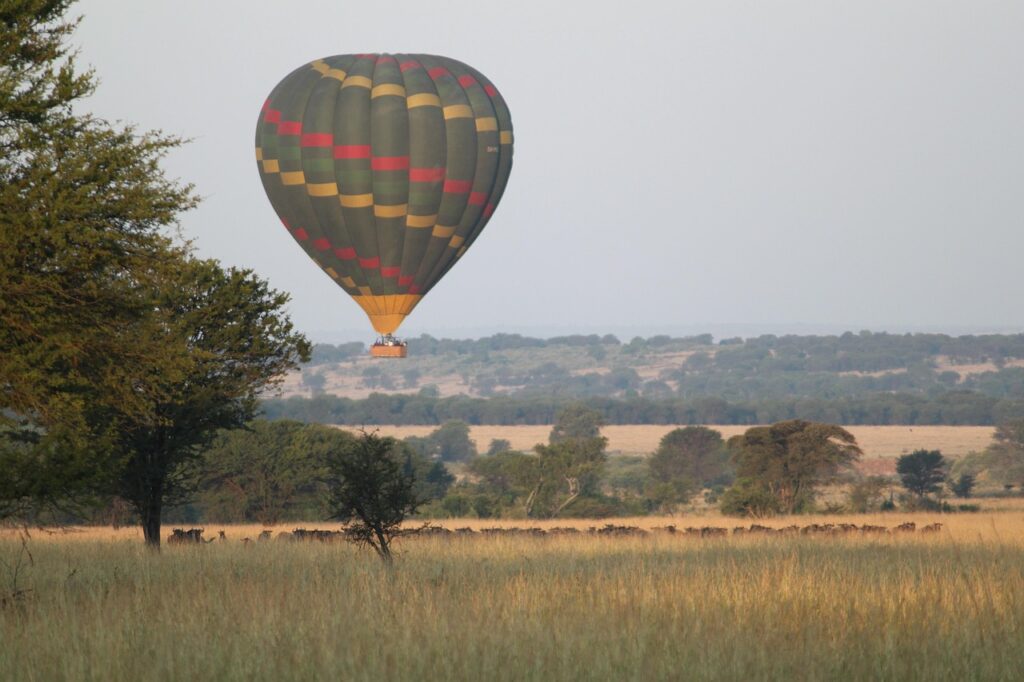
    The wildebeest are ecosystem engineers. Their grazing patterns prevent the Serengeti’s grasslands from becoming overgrown, enabling a diversity of plant and animal species to thrive. Their dung fertilizes the soil. Their carcasses feed scavengers from vultures to hyenas to beetles, completing nutrient cycles that sustain the entire food web. When wildebeest numbers declined due to rinderpest disease in the early 20th century, the Serengeti’s grasslands transformed dramatically. Trees encroached, fires became more frequent, and biodiversity dropped. It was the recovery of wildebeest populations – not direct human intervention – that restored the Serengeti to the world-famous ecosystem it is today.
    In other words, the migration is not just a show. It is the heartbeat of one of Earth’s most important wild places.

    When and Where to Witness the Migration

    For anyone considering experiencing the migration firsthand, timing and location are everything.

    • January–March: Visit the Ndutu area in southern Tanzania for calving season – incredible predator action and tender newborn scenes.
    • June–July: Head to the western Serengeti for Grumeti River crossings.
    • July–October: Position yourself in the Masai Mara for the iconic Mara River crossings.
    • November–December: Catch the return journey through the northern Serengeti.

    No single point in the year is “better” than another – each phase offers a different, equally compelling chapter of the story.

    Final Thought

    The Great Wildebeest Migration has been happening since long before humans arrived to name it, photograph it, or write articles about it. It will likely continue long after we are gone — provided we give it the space to do so.

    There is something humbling about standing at the edge of the Mara River and watching a million animals throw themselves into the current because nature told them to. No hesitation. No negotiation. No waiting.

    The wildebeest migration doesn’t wait for no one.

    And perhaps that is the most profound wildlife lesson of all: some forces of nature are bigger than any single creature, and the only way to survive is to move with them.

  • Floating Over the Maasai Mara at Dawn Is Exactly What It Sounds Like

    Floating Over the Maasai Mara at Dawn Is Exactly What It Sounds Like

    It’s 4:30 in the morning. Your guide knocks on your tent canvas with two gentle raps, and you hear the words “balloon day” spoken into the dark. You pull on your layers — the Mara at pre-dawn is genuinely cold — and step outside to find the sky still thick with stars and a cup of hot tea already waiting.

    The drive to the launch site takes about twenty minutes. Your Land Cruiser headlights sweep across a lion sitting calmly beside the track, watching you pass with the absolute indifference of something that has never needed to hurry for anything. You roll down the window for a moment and just listen. The Mara at night is never quiet — there are hippos somewhere, frogs, a distant hyena. But it is the kind of quiet that exists between sounds, and it makes the silence of what comes next feel earned.
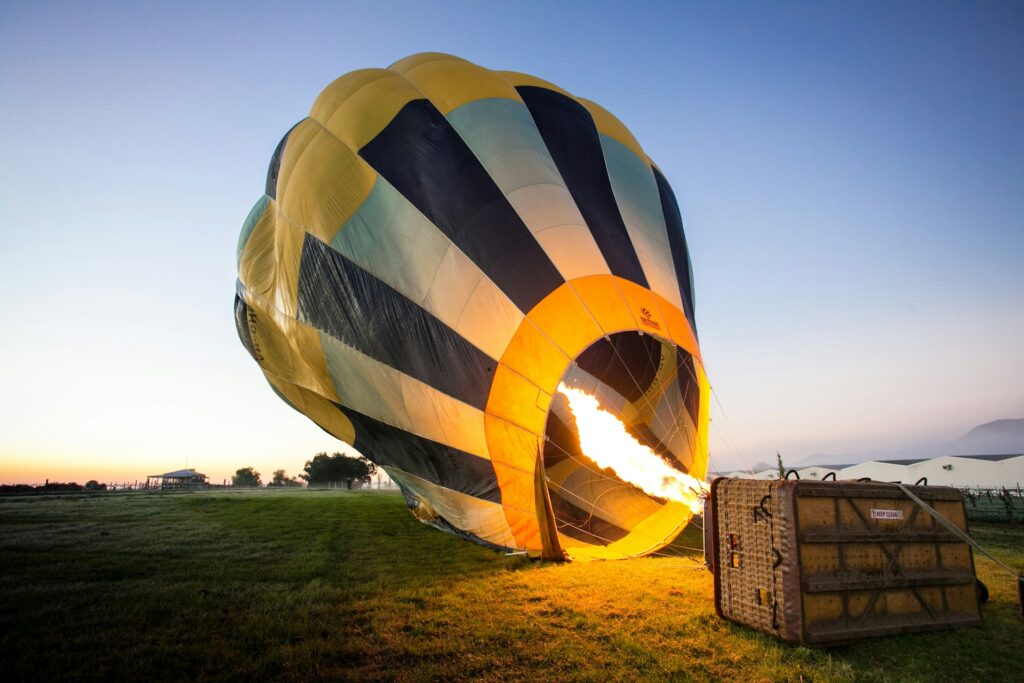
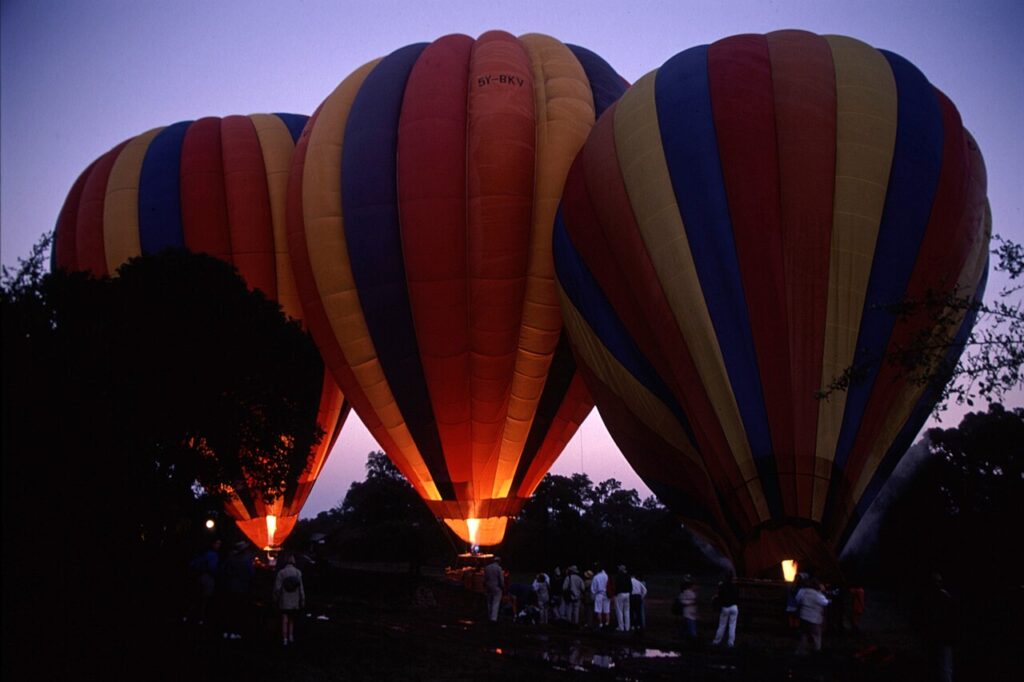
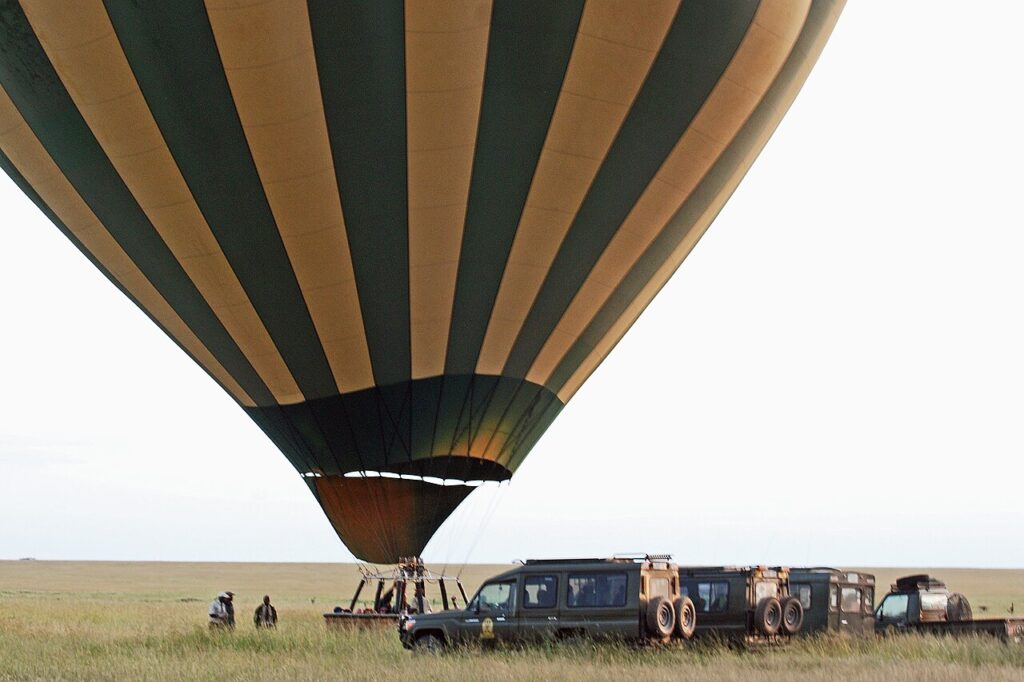
    As you arrive, crew members lay out the balloon in the half-dark. It looks like an impossibly large cathedral of canvas stretched across the grass. Slowly, the envelope expands as powerful fans push air inside. Meanwhile, the sky begins to lighten at the eastern horizon.
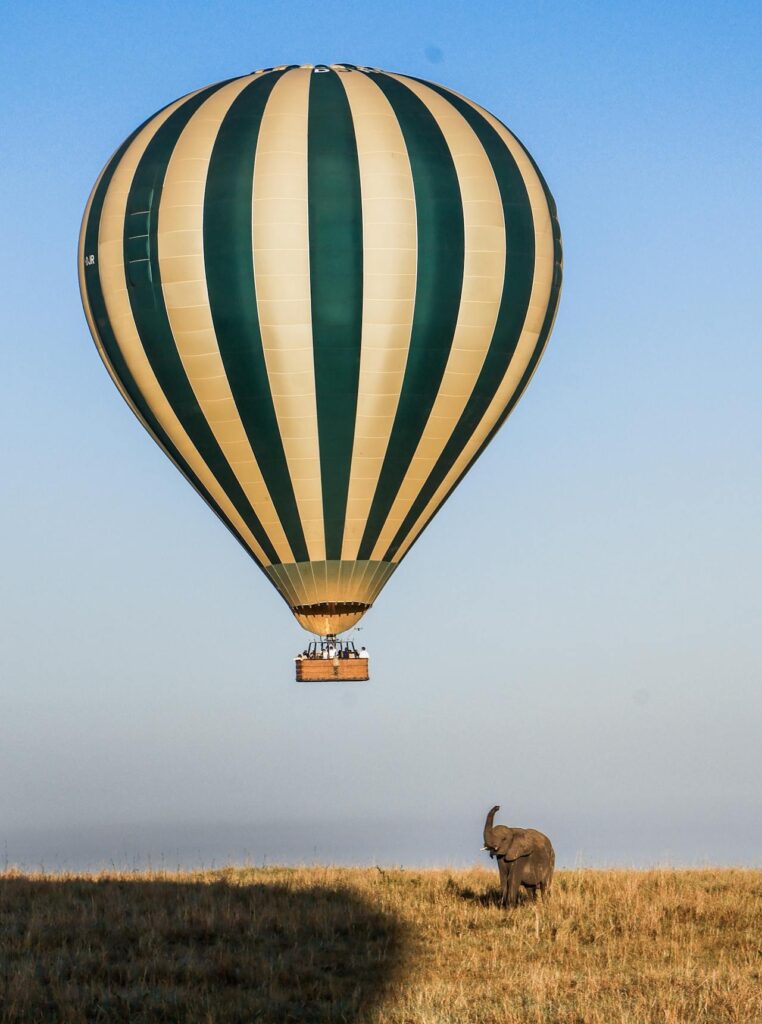
    Suddenly, the balloon stands upright and strains gently at its tethers. Now, the burners roar to life with a warm, orange glow. Finally, you climb into the basket and prepare for liftoff.

    Then the burner fires. The balloon strains upward. The ground simply drops away beneath you.

    And for the next hour, you will not find the right words for what you are seeing.

    What a Maasai Mara Balloon Safari Actually Is

    A hot air balloon safari over the Maasai Mara is not a gimmick. It is not a tourist tick-box. It is, by the testimony of an enormous proportion of the travelers who have done it, the single most memorable experience of a Kenya trip — and in a country built on extraordinary experiences, that is a meaningful statement.

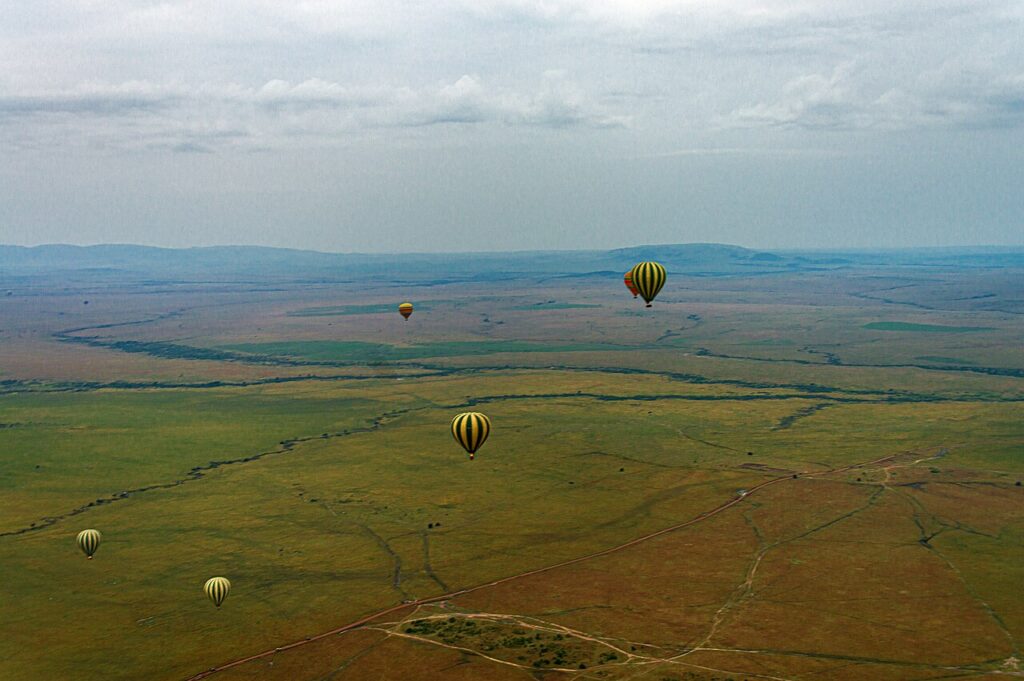
    The flight typically lasts between 45 minutes and one hour, beginning at dawn and drifting with the prevailing wind across a section of the Mara ecosystem that your ground-based game drives can only partially cover. Altitude varies throughout the flight — your pilot can descend to within a few feet of the ground for intimate wildlife encounters, or ascend to 1,000 feet or more for a panoramic perspective that reveals the true scale of the Mara’s endlessly rolling plains. The distance covered during a typical flight is roughly 25–40 kilometers of reserve, depending on wind conditions — meaning you see more terrain in one hour than most ground-based safaris cover in a full day.

    The silence is the thing nobody fully prepares you for. Between burner firings — which produce a thunderous, surprisingly warm roar directly above your head — there is an absolute stillness at altitude that you simply cannot achieve in any vehicle. You float. Animals below do not spook from a balloon the way they do from engines and wheels. A pride of lions stays exactly where it is. Elephants continue their morning walk. Hyenas barely look up. The balloon passes over them like a cloud, and the life of the Mara continues undisturbed beneath you.

    The Full Experience: From Tent to Champagne

    Pre-Dawn Pickup (4:30–5:00 AM)

    Your lodge or camp arranges transfer to the launch site, typically 20–45 minutes from your accommodation depending on location. The early start is not negotiable — the balloon must lift before the day’s thermals develop and make controlled flight more difficult. This early drive is itself often productive: nocturnal animals are still active, and the Mara’s light in the last thirty minutes before dawn is extraordinary.

    Arrival at the Launch Site

    A warm welcome from the balloon crew and a cup of tea or coffee while you watch the inflation. This is genuinely spectacular — the balloon rises from flat canvas to a towering, lit structure against the dark sky in about fifteen minutes. A safety briefing from your pilot covers the basics: how to position yourself in the basket, what to expect on landing, and the signals you’ll use during the flight. Pay attention. It’s brief and practical.

    The Flight (45–60 Minutes)

    The basket holds between 8 and 16 passengers depending on the balloon size, divided into compartments. Ask your operator for a corner position when booking — you’ll have wider angles for photography and more personal space.

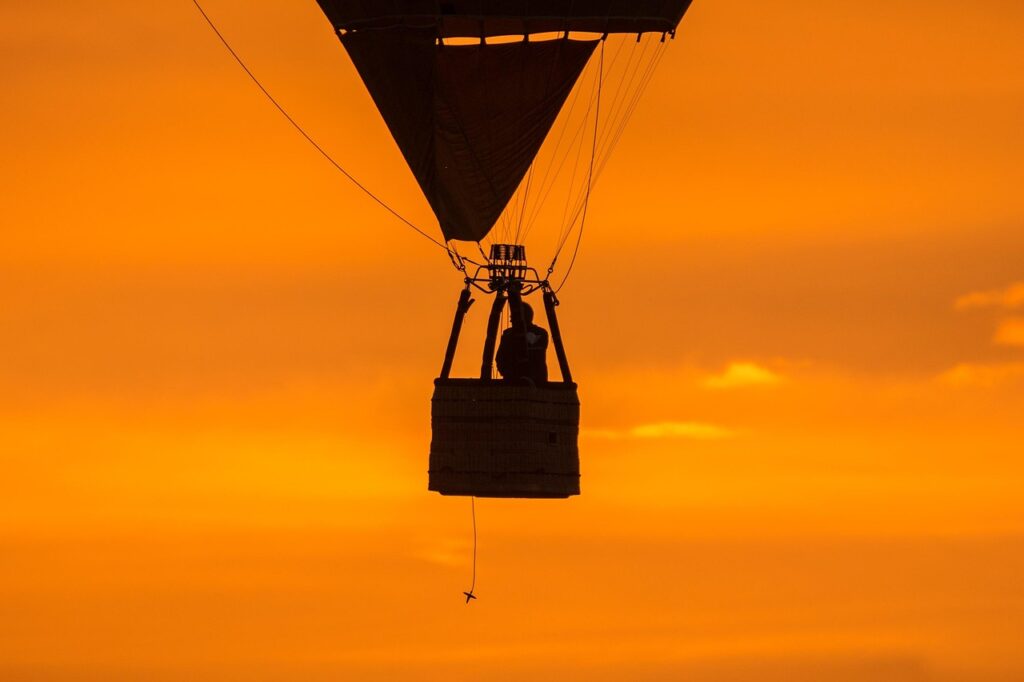
    The ascent is a smooth, almost imperceptible rise. One moment you are on the ground; a few seconds later, the acacia trees are at eye level, and then below you, and then the whole sweep of the Mara is spreading out in every direction as the sun breaks over the eastern escarpment.

    What you see depends on where in the Mara you’re flying and what time of year it is. Year-round residents include elephant, giraffe, zebra, wildebeest, topi, hippos in the river bends, and the big cats — lions and cheetahs in particular are commonly spotted from the air because the high vantage point reveals them lying in grass that would conceal them from a vehicle. Leopards are harder — they tend to stay in riverine forest — but not impossible.

    During the Great Migration (July–October), the aerial perspective becomes something else entirely. From above, you understand the scale of the movement in a way that ground-level simply cannot convey. Columns of wildebeest stretching to the horizon. The Mara River’s crossing points dense with animals. The controlled chaos of predators moving along the edges. It is one of the great natural spectacles of the world viewed from the only perspective that shows you all of it at once.

    Landing

    Balloon landings vary. In optimal conditions, it’s a gentle, almost soft touchdown. In stronger wind, the basket may drag for a moment — exciting rather than alarming, and something your pilot will have briefed you on. Local Maasai tribesman in their vivid red shukas are often present at the landing zone, having tracked the balloon’s path across the plains. The sight of them against the open Mara at sunrise is, by itself, worth the early morning.

    The Champagne Bush Breakfast

    This is the part that surprises people who were expecting it to be a postscript.

    The bush breakfast is a full sit-down affair, laid out on white linen on folding tables in the open savannah — wherever the balloon happens to have landed. There are no roads, no fences, no signs of infrastructure in any direction. Just the sound of the plains, the light warming across the grass, and a table set with silver cutlery, fresh flowers, champagne (or sparkling juice if you prefer), omelets made to order, fresh fruit, pastries, Kenyan coffee, and everything else that makes the whole experience feel thoroughly, deliberately civilized in the most uncivilized setting imaginable.

    It typically runs for about an hour, and then a vehicle transfers you back to your camp or lodge, arriving before 10:30–11:00 AM — leaving you with a full afternoon game drive ahead if you want it.

    How Much Does It Cost? The Honest Breakdown

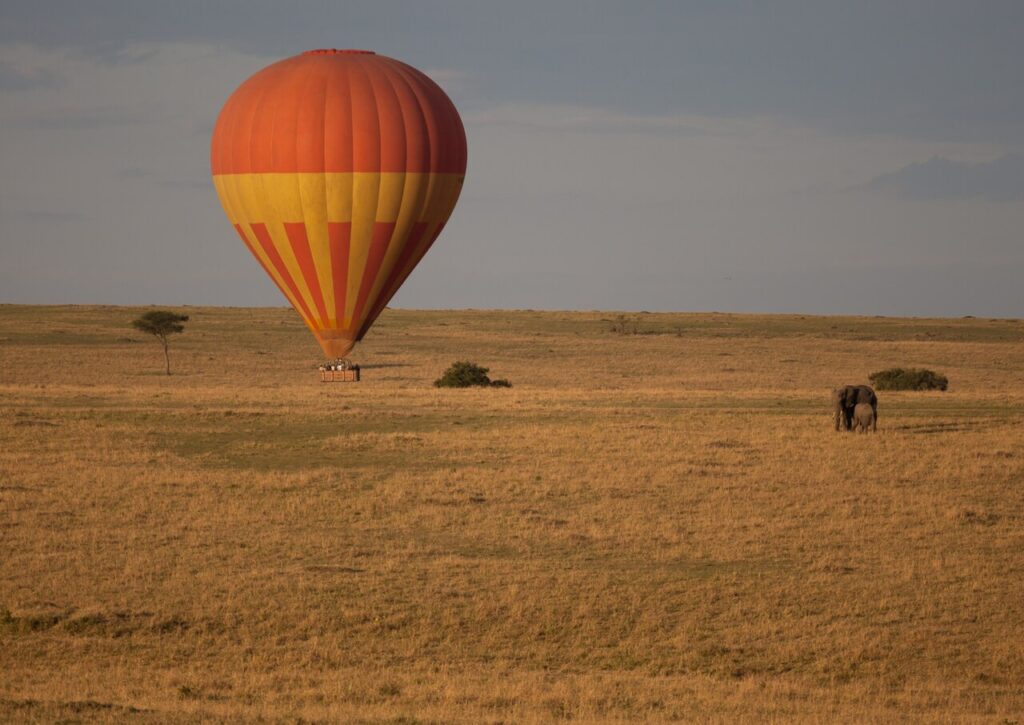
    Photo by Fali  Poncha: https://www.pexels.com/photo/hot-air-balloon-and-elephant-in-maasai-mara-kenya-35717949/

    Balloon safaris are one of Kenya’s most price-consistent experiences. Unlike accommodation, where costs vary enormously by season and operator tier, balloon safari pricing is set by the operators and changes modestly from year to year.

    Shared group flights (up to 16 passengers): Current pricing from the two primary Maasai Mara operators — Governors’ Balloon Safaris and Balloon Safaris Ltd — runs in the range of $450–$580 USD per adult for a shared basket flight including the champagne breakfast. Some lodges price this at the slightly higher end during peak migration season. Child pricing (typically ages 7–15) runs lower than adult rates — confirm directly with your operator or booking agent.

    Private charter flights: For couples, small families, or groups wanting an exclusive experience, private balloon charters are available from around $3,000–$4,500 USD for the whole basket. Divided among four to eight people, this can represent reasonable value for a profoundly private experience.

    What’s included in the standard price: The flight, professional licensed pilot, pre-flight tea/coffee, the champagne bush breakfast, Kenya Wildlife Service flight permits, and the transfer back to your camp. What varies is whether reserve entry fees for the day are separately charged — confirm with your operator.

    Why it costs what it costs: Balloon operations are logistically demanding. Each balloon has a limited operational lifespan of around 850 flight hours before replacement. The crew typically numbers six in the basket (pilot plus five passengers) plus a chase crew of ten or more who track and retrieve the balloon after landing. Specialist maintenance, licensed pilots, CAA Kenya regulatory compliance, insurance, and the full breakfast operation in a remote location — all of this sits behind a price that travelers regularly describe, in hindsight, as entirely justified.

    The Two Primary Mara Operators

    Governors’ Balloon Safaris

    Governors’ Balloon Safaris pioneered hot air ballooning in the Mara in the 1970s and have been flying safely ever since. Operating from the launch site at Little Governors’ Camp in the Mara Triangle, Governors’ is widely regarded as the benchmark Mara balloon operator — the name that serious safari travelers associate with reliability, experienced pilots, and a flight path that runs along what many consider the best balloon route in the reserve.

    Their equipment is built specifically for Kenyan conditions. Their pilots are drawn from international aviation backgrounds and are among the most experienced in the industry. If your accommodation is in the Mara Triangle area, Governors’ is the natural operator.

    Balloon Safaris Ltd

    The other long-established primary operator in the Mara, Balloon Safaris Ltd operates from multiple launch sites across the main reserve east of the Mara River. Their versatility makes them well-suited to guests staying in a wider range of camps and lodges in the reserve’s eastern sections. Both operators are CAA Kenya-licensed and deliver comparable experiences; the primary distinction is launch location and, consequently, which section of the Mara you fly over.

    Adventures Aloft

    A third operator with multiple launch sites across the reserve, Adventures Aloft is frequently used by tour operators working with a range of accommodation options. Worth considering for travelers whose camps are not optimally positioned for either of the two primary operators.

    A practical note: You do not normally book directly with balloon operators. Your safari camp, lodge, or tour operator handles balloon bookings as part of your itinerary — they work with the appropriate operator for your accommodation’s location. Book through your trip organizer and confirm the reservation in writing.

    Mara vs. Amboseli: Which Balloon Safari Is Right for You?

    The Maasai Mara is not the only place in Kenya where you can take a balloon safari. Amboseli National Park, famous for its elephant herds and iconic Kilimanjaro backdrops, also offers balloon flights — and they are a genuinely different experience worth considering if your trip includes Amboseli.

    Maasai Mara Balloon Safari

    Best for: The widest variety of wildlife from the air, the dramatic river crossing landscapes (July–October), the iconic Mara plains, the full Great Migration experience, and the highest concentration of predators. The Mara’s open topography is exceptionally well-suited to balloon viewing — you can see for enormous distances in every direction.

    Scenery: Golden savannah grasslands, snaking river bends, scattered acacia woodland, and the gentle folds of the Oloololo escarpment on the western horizon.

    When: Year-round, peaking dramatically during the Great Migration (July–October).

    Amboseli Balloon Safari

    Best for: An experience that is perhaps the most photographically spectacular in all of Kenya — elephants beneath Kilimanjaro, seen from the air as the mountain catches the first light of dawn. If you are an elephant person or a landscape photographer, Amboseli from the air is transcendent.

    Scenery: The vast Amboseli basin, wetlands fed by underground streams from Kilimanjaro, enormous elephant herds, and — weather permitting — the extraordinary visual of Africa’s highest peak filling the southern sky.

    When: The clearest Kilimanjaro views occur January–March and June–October. The mountain regularly hides in cloud during the rainy seasons.

    The honest comparison: For overall wildlife diversity and volume, the Mara is the stronger balloon destination. For sheer photographic and emotional impact — particularly if you get a cloud-free Kilimanjaro morning — Amboseli is unmatched. If your trip includes both parks, both flights, and your budget allows it: do both. There is no rule against loving two extraordinary things simultaneously.

    Is a Balloon Safari Worth It? The Honest Answer

    When travelers first encounter the price — and it is a significant spend in the context of a safari — the question of value comes up immediately. Here is the honest answer:

    It depends on what you want from your safari.

    If you are the kind of traveler who prioritizes maximizing wildlife sightings per hour, the same money spent on additional game drives would probably get you more total animal encounters. Game drives — particularly with an excellent guide in a private conservancy — are in many ways the richest way to experience the Mara.

    If you are the kind of traveler who prioritizes perspective, silence, beauty, and moments that recalibrate your understanding of scale, the balloon is almost certainly the better investment. No game drive shows you the Mara the way a balloon does. Furthemore,no vehicle gives you the silence. No land-based experience puts you simultaneously above a herd of a thousand wildebeest while the sun rises over the escarpment.

    The feedback from travelers who have done it is, in our experience, remarkably consistent: it is among the best things they have ever done. Not just in Kenya. Anywhere.

    One caveat exists: the experience depends entirely on the weather. Pilots cancel flights for strong winds, rain, or poor visibility. If this happens, the standard policy offers a full refund or rescheduling. Please accept this outcome gracefully. After all, a balloon cannot fly safely in bad conditions. Ultimately, a cancelled flight is the only correct choice in those circumstances. Safety always remains the top priority for every crew.

    The Science of the Silence — Why Wildlife Responds Differently to Balloons

    One of the defining qualities of a balloon safari — and one that photographs simply cannot convey — is the way animals behave beneath you. This is not incidental. It is rooted in how wildlife processes threat.

    On a game drive, you arrive in a vehicle with an engine, exhaust smell, and mechanical noise. Even the best-behaved safari vehicle creates a sensory footprint that animals register and calibrate their response to. They tolerate it, habituate to it over time in parks with regular vehicle traffic — but they know you are there.

    A hot air balloon is silent. It has no engine exhaust. It casts no shadow at altitude. The only sound it produces is the occasional blast of the burner, which fires upward and is masked by the balloon envelope itself before the sound reaches the ground below. To most animals, the balloon overhead is simply weather — a large cloud shape drifting with the breeze. They do not associate it with threat.

    The consequence is wildlife behavior that is entirely natural and entirely unpoised. A lion pride you fly over at 200 feet is not performing tolerance for a nearby vehicle. It is simply being a lion pride — grooming, sleeping, watching the plains, completely indifferent to your presence above them. A herd of elephants moving along a seasonal watercourse continues its movement without deviation. A cheetah scanning for prey from a termite mound doesn’t even glance upward.

    You are, for this hour, truly invisible. And the Mara you see from that invisibility is the Mara as it actually is.

    The Balloon Safari for Couples and Honeymooners

    It would be a missed opportunity not to address this directly: a hot air balloon safari over the Maasai Mara at dawn, followed by a champagne breakfast in the bush, is one of the most romantic experiences available on this planet. Full stop.

    Many couples time their trip to enjoy a Maasai Mara balloon safari for an anniversary. In fact, others choose this experience for a honeymoon or milestone moment. The combination of elements feels almost unreasonably perfect. First, you enjoy the pre-dawn intimacy of a shared experience. Next, you witness the extraordinary visual spectacle of the Mara from the air.

    Furthermore, the silence and the light create a magical atmosphere. Ultimately, the unhurried breakfast celebration provides the perfect conclusion. Indeed, these moments turn a simple flight into a lifelong memory. Consequently, this adventure remains a top choice for travelers seeking romance in Kenya.

    Several operators offer the option of a private picnic breakfast rather than the group set-up — for couples who want complete privacy after landing, this upgrade converts the communal celebration into a table for two under a single acacia tree, with the plains entirely to yourselves.

    If you are travelling to Kenya for a honeymoon or significant anniversary, build the balloon morning into your itinerary as an anchor experience. Book the private breakfast option if your budget allows it. And communicate the occasion to your operator at the time of booking — the Mara hospitality industry is very good at marking these moments with the attention they deserve.

    Common Questions Answered Honestly

    A sister balloon is ready, loaded and about to lift off . . . to the right are the “chaser” vehicles since one never knows where a balloon will land

    “What if I’m afraid of heights?”

    This question comes up often, and the answer surprises most people: a balloon is one of the least vertiginous ways to experience altitude. You are in a basket with solid walls rising to chest height. You cannot see directly straight down without looking over the edge intentionally. The ascent is so smooth and gradual that there is no moment of sudden height awareness — the ground simply recedes gently. Many travelers who consider themselves genuinely afraid of heights complete balloon safaris without distress. That said, if severe height anxiety is a real concern, it is worth discussing with your operator honestly before booking.

    “What if the balloon is cancelled?”

    Operators will cancel flights for safety reasons — strong or unpredictable winds, rain, poor visibility. If this happens, the standard policy is a full refund or the option to reschedule to another morning of your stay. Accept this gracefully. A flight cancelled for conditions would have been a worse experience than no flight at all — the pilots are making the right call.

    “What do I do if I have a medical condition?”

    First, you must advise your operator fully at the time of booking. For example, you should mention any recent joint surgeries. Crucially, the landing requires a certain amount of physical stability. Next, consider your cardiovascular health. In fact, the altitude and cold can affect specific conditions.

    Furthermore, most operators do not permit pregnant passengers to fly. Instead, you should plan your adventure for a later date. Ultimately, your travel health clinic provides the best advice on fitness to fly. Therefore, consult with a doctor before you finalize your plans. By doing so, you ensure a safe and enjoyable Kenya balloon safari.

    “Can I eat beforehand?”

    The basket can become warm from the burner, and some passengers do experience mild motion sensitivity — particularly on gusty mornings. Avoid a heavy meal before the flight. A light snack or tea/coffee is fine. The bush breakfast afterwards is generous enough to compensate.

    “How many people will be in the basket?”

    A standard shared flight carries up to 16 passengers divided into basket compartments. If this feels too crowded, ask about smaller basket options or private charter flights. The experience in a 16-person basket is still excellent — but a 6-person basket is noticeably more intimate.

    Practical Details: Everything You Need to Know Before You Go

    Who Can Fly

    Most operators set a minimum age of 7 years — some require 8. Children under the minimum are not permitted in the basket. Pregnant women are advised not to fly. Passengers should be physically capable of standing for an hour and handling a potentially bumpy landing.

    Passengers with significant mobility limitations or joint issues should advise their operator at the time of booking — climbing into and out of a basket requires some agility, and the operator can advise on feasibility.

    What to Wear

    The Mara at 5:00–6:00 AM is cold — typically 10–16°C (50–61°F). Dress in layers, with the knowledge that it will warm considerably as the morning progresses. A lightweight fleece or light jacket over your safari layers is ideal. Closed-toe shoes are required (not flip-flops or sandals). A hat is strongly recommended — the burner produces substantial heat directly above the basket. Neutral safari colors (khaki, olive, tan) rather than bright colors.

    Photography

    A balloon safari is one of the greatest photographic opportunities of a Kenya trip, but it requires some planning. Bring your telephoto zoom for wildlife shots. Bring a wide-angle lens or use your phone for landscape and aerial shots. A camera strap firmly attached is essential — you don’t want to drop anything. A small bag for lens changes that won’t fall over in the basket is useful. The light at dawn is genuinely extraordinary — blue and gold at the same time — and it will not last long. Have your camera settings dialed in before you lift off.

    Booking Timeline

    Book as early as possible — during peak Migration season (July–October), places on morning flights fill weeks or months in advance. For most other periods, two to four weeks’ notice is usually sufficient, but the prudent approach is to confirm at the time of your safari booking.

    Adding a Balloon Safari to Your Kenya Trip

    The balloon safari is best understood not as a standalone activity but as a morning within a broader Mara stay. The ideal structure: arrive at your Mara camp or lodge the day before your balloon flight, do an afternoon game drive to settle into the landscape, fly the following dawn, return for breakfast at camp, rest, and then do an afternoon game drive. This rhythm — ground one evening, air one morning, ground again the next afternoon — gives you the complete Mara experience from every possible vantage point.

    Ready to add a balloon safari to your Mara itinerary? Enquire about the Maasai Mara packages with balloon safari here.

  • Kenya’s Trails That Will Humble and Astonish You

    Kenya’s Trails That Will Humble and Astonish You

    Kenya is often celebrated for its iconic safaris, the sweeping savannahs, and the unforgettable wildlife encounters. But beyond the game drives lies another side of this beautiful country – one that is raw, challenging, and deeply rewarding. Kenya’s trails are not just paths through nature; they are journeys that test your limits, shift your perspective, and leave you in awe.

    Whether you are an experienced hiker or someone simply craving a deeper connection with nature, Kenya offers trails that will humble and astonish you in equal measure. From towering mountains to lush forests and dramatic escarpments, every step tells a story.

    Why Kenya’s Trails Stand Out

    What makes Kenya’s hiking trails unique is their diversity. In a single country, you can trek through alpine terrain, dense rainforest, volcanic landscapes, and open plains. The altitude changes, unpredictable weather, and rugged terrain mean these trails are not always easy – but that’s exactly what makes them unforgettable.

    Beyond the physical challenge, there is something profoundly grounding about hiking in Kenya. The silence of the mountains, the distant call of wildlife, and the vast, open landscapes remind you just how small you are in the grand scheme of nature.

    Mount Kenya: A True Test of Endurance

    At the heart of Kenya’s hiking scene is Mount Kenya, Africa’s second-highest peak. If you get to climb this majestic mountain, you’ll get to have a wild experience of your life.

    The journey to Point Lenana, the most popular summit for trekkers, takes you through changing ecosystems. You start in dense rainforest, move into bamboo zones, and eventually reach alpine desert and icy peaks. Each stage is breathtaking in its own way.

    Altitude sickness, cold temperatures, and steep climbs make this trail humbling. But reaching the summit at sunrise, with clouds stretching endlessly below you, is a reward that words can barely capture.

    The Aberdare Ranges: Wild and Untamed

    If you’re looking for something less crowded but equally thrilling, the Aberdare Ranges offer a rugged escape into the wild. This region is known for its misty forests, deep valleys, and cascading waterfalls.

    Hiking here feels almost mystical. The trails are often muddy, the terrain unpredictable, and the weather can change in an instant. You may find yourself trekking through thick fog one moment and standing under clear skies the next.

    What makes the Aberdares truly humbling is their rawness. There are fewer marked paths, and wildlife encounters are possible, reminding you that you are a guest in nature.

    Hell’s Gate National Park: Adventure Meets Beauty

    For those who want a mix of hiking and adventure, Hell’s Gate National Park is a must-visit. Unlike most parks in Kenya, you can walk or cycle here, making it an interactive experience.

    The dramatic cliffs, deep gorges, and geothermal activity create a landscape that feels almost otherworldly. The popular Hell’s Gate Gorge challenges you with narrow passages, sudden drops, and rocky climbs.

    While it may not be as physically demanding as Mount Kenya, the terrain requires careful navigation. It’s a reminder that even shorter trails can surprise you with their intensity.

    Ngong Hills: Simple Yet Powerful

    Just outside Nairobi lies one of the most accessible yet impactful trails – Ngong Hills. At first glance, the rolling green hills may seem gentle, but the strong winds and continuous climbs quickly change your perception.

    The trail stretches across a series of peaks, offering panoramic views of the Great Rift Valley on one side and Nairobi city on the other. The wind can be relentless, forcing you to slow down and stay grounded.

    Ngong Hills is a perfect example of how even a relatively short hike can humble you. It teaches patience, resilience, and the importance of pacing yourself.

    Mount Longonot: A Crater Worth Climbing

    Mount Longonot is one of Kenya’s most iconic hiking destinations. This dormant volcano offers a challenging yet rewarding climb.

    The hike begins with a steep ascent to the crater rim, which alone is enough to test your endurance. But the real adventure begins when you decide to walk around the rim – a loop that offers stunning views of the crater floor and the surrounding Rift Valley.

    The heat, lack of shade, and steep inclines make this trail particularly demanding. Yet, the sense of accomplishment you feel at the top is unmatched.

    Karura Forest: Serenity in the City

    For those who prefer a calmer experience, Karura Forest offers a peaceful escape within Nairobi. While it may not be as physically demanding as other trails, it still has its own quiet magic.

    Walking through the forest, you’ll encounter waterfalls, caves, and winding paths shaded by towering trees. It’s a reminder that you don’t always need extreme challenges to feel connected to nature.

    Karura is ideal for beginners or anyone looking to unwind while still experiencing the beauty of Kenya’s landscapes.

    Menengai Crater: A Hidden Gem

    Often overlooked, Menengai Crater is one of the largest volcanic craters in the world. The hike here is both humbling and awe-inspiring.

    Standing on the edge of the crater, you’re faced with an immense, almost surreal landscape. The descent into the crater is challenging, with steep paths and loose rocks, but it offers a unique perspective of the terrain.

    This trail is perfect for those who want something off the beaten path.

    What These Trails Teach You

    Kenya’s trails are not just about reaching a destination, they are about the journey itself. They teach you:

    • Resilience: The ability to keep going even when the path gets tough.
    • Patience: Progress may be slow, but every step matters.
    • Respect for Nature: The environment is powerful and unpredictable.
    • Self-Awareness: You learn your limits—and how to push beyond them.

    These lessons stay with you long after the hike is over.

    Tips for Hiking in Kenya

    Before you set out on any trail, preparation is key. Here are a few essential tips:

    • Start early: Weather conditions are more favorable in the morning.
    • Stay hydrated: Carry enough water, especially for high-altitude or hot.
    • Dress appropriately: Layered clothing works best for changing conditions.
    • Know your limits: Choose a trail that matches your fitness level.
    • Go with a guide if needed: Especially for remote or less-marked trails.

    In Conclusion

    Kenya’s trails offer more than just scenic beauty – they offer transformation. Each hike challenges you in different ways, whether it’s the altitude of Mount Kenya, the rugged terrain of the Aberdare Ranges, or the windswept peaks of Ngong Hills.

    These experiences remind you that nature is not something to conquer, but something to respect and learn from.

    So if you’re looking for an adventure that will truly move you – physically, mentally, and emotionally; Kenya’s trails are waiting. They will humble you. They will astonish you. And most importantly, they will change you.

  • Amboseli’s Elephants Walk Toward Kilimanjaro and You Will Cry

    Amboseli’s Elephants Walk Toward Kilimanjaro and You Will Cry

    Nobody warns you that it will be the silence that does it.

    You have seen photographs. Ofcourse you know what Amboseli is supposed to look like — the elephants, the mountain, the golden plains. You have the image in your head. It is one of the most reproduced wildlife photographs in Africa, so familiar it has become almost a cliché. You think you know what to expect.

    Then you are actually there. You sit in an open vehicle as morning light floods the plain. Suddenly, a matriarch emerges from the Enkongo Narok swamp. Her family follows close behind her. Calves press against their mothers’ flanks. Meanwhile, adolescents push at the edges with the restlessness of teenagers.

    These animals are enormous and unhurried. They seem completely indifferent to your presence. Beyond them, Kilimanjaro fills half the southern sky. Photographs never quite convey this scale. The mountain rises white and permanent from the plains. Now, its glaciers catch the first light of the morning.

    Something happens to people at this moment. You will see it inside the vehicle. Suddenly, other guests fall quiet. They reach reflexively for their cameras. Then, they put them down again. Instead, they choose to simply look. In this way, the silence of the Mara takes over.

    The images end up fine. The moment itself is better.

    Ultimately, this is Amboseli National Park. It is a place where the largest land animals on earth walk daily. Specifically, they travel across one of Africa’s most extraordinary landscapes. Furthermore, the highest mountain on the continent provides a stunning backdrop.

    In fact, dedicated researchers observe these herds every day. These experts have known the individual elephants and their families for over fifty years. Consequently, the park offers a deep look into elephant society. Indeed, Amboseli is one of the great wildlife destinations on the planet by any measure. Therefore, every safari enthusiast should prioritize a visit to this iconic location.

    What Amboseli Actually Is

    Amboseli covers roughly 392 square kilometers in southern Kenya. Specifically, it sits within Kajiado County along the Tanzanian border. There, Kilimanjaro looms directly over the park’s southern boundary. The name comes from the Maa word for “salty dust place.”

    Indeed, this is an accurate description of the central basin. A pale, alkaline lake bed occupies much of the park. Originally, this area was part of a massive Pleistocene lake. Today, that ancient water source has left behind a unique and dusty valley.

    It is a compact park by Kenyan standards. The Maasai Mara is three times the size; Tsavo’s two parks together are more than twenty times larger. But Amboseli’s compactness is one of its strengths: the park’s open topography — flat, semi-arid plains with scattered acacia woodland, dominated by permanent swamps in the south and centre — means visibility is extraordinary. There are no dense forests to lose animals in, no thick bush to frustrate sightings. On the open Amboseli plain, what you’re looking for is almost always visible.

    The park’s survival depends on a remarkable hydrological connection with Kilimanjaro itself. Underground aquifers recharged by the mountain’s melting glaciers and rainfall feed a series of permanent swamps — Enkongo Narok and Longinye being the most significant — that remain water-filled even during the most severe droughts. These swamps are the beating heart of the Amboseli ecosystem: lush, green, papyrus-fringed oases in the middle of a landscape that in the dry season looks like the surface of another planet. Every animal in Amboseli depends on them. The elephants are drawn to them daily. And the vision of elephants wading through green swamp water with Kilimanjaro reflected behind them is the defining image of the place.

    The Elephants: The Whole Story

    Amboseli’s elephants are unlike elephants almost anywhere else in Africa, and the reason is scientific.

    Since 1972, Cynthia Moss and the Amboseli Elephant Research Project (AERP) — now the Amboseli Trust for Elephants — have conducted one of the longest-running longitudinal wildlife studies in history. Researchers here have named and studied every single elephant family across multiple generations. In fact, these experts recognize individual elephants on sight. They know their histories by heart and have mapped every complex family connection. Because of this, the park feels less like a wilderness and more like an epic, multi-generational saga. Ultimately, you are not just watching animals; you are watching a well-documented history unfold. This continuous, multigenerational observation has produced some of the most significant discoveries in elephant science — complex social structures, long-term memory, sophisticated acoustic communication, grief and mourning behaviors, and a depth of intelligence that has permanently shifted global understanding of these animals.

    This level of habituation offers visitors an extraordinary experience. Specifically, researchers have observed these elephants closely for over fifty years. Because of this respectful history, the herds are remarkably calm. They are not tamed or performing. Instead, they are simply accustomed to quiet vehicles.

    Consequently, you can enjoy sightings of extraordinary intimacy. For example, you might watch calves learning to use their trunks. Elsewhere, matriarchs discipline restless adolescents. Meanwhile, bulls in musth move through the herds with total authority. Ultimately, their proximity allows you to witness the true soul of the elephant.

    The park protects some of Africa’s last true “super-tuskers.” These bulls carry ivory so long it actually drags along the ground. Amazingly, they still carry genetics that survived the brutal poaching waves of the 1970s. These individuals are Amboseli royalty.

    An encounter with one stays with you forever. They move with a massive, deliberate grace that suggests genuine ownership of the land. Simply put, watching a super-tusker walk toward Kilimanjaro is a moment that never leaves you.

    Amboseli’s elephants also display one of the most iconic visual phenomena in African wildlife: the “red elephants.” The park’s iron-rich volcanic soil stains their skin a deep ochre-red when they dust-bathe and roll in it, a natural behavior that protects them from sun and insects. A herd of Amboseli elephants at midday, dust-bathed in red soil against the pale plain, is a different and equally striking vision from the classic morning swamp silhouette.

    The Daily Rhythm of the Herds

    Amboseli’s elephants follow a predictable daily pattern shaped by survival, and understanding it means you’re always in the right place.

    Early morning (6:00–9:00 AM): Family groups graze on the open northern and eastern plains, spreading out as temperatures remain cool. This is the golden hour for elephant photography — the animals spread across the plain, the light is warm and low, and Kilimanjaro (still cold from the night, often cloud-free at this hour) fills the southern sky. This is the classic Amboseli moment. Be in position by 6:30 AM.

    Midday (10:00 AM–3:00 PM): Heat drives the herds south and into the swamps. Elephants wade, drink, bathe, and rest in the shade of the papyrus margins. This is spectacular in its own way — large numbers of elephants concentrated in the swamp water, calves splashing, adults rolling — but less photogenic than the open-plain morning.

    Late afternoon (4:00–6:30 PM): The herds emerge from the swamps and move back north, crossing the open plain in the extraordinary late light. This is the other prime photography window — backlighting turns the dust raised by their feet into gold, and the mountain, often clearer again after the afternoon clouds have dispersed, completes the scene.

    The secret: Hire the best possible guide — ideally one with AERP connections or a personal history with the elephant families — and follow their intelligence on which herds are where that morning.

    Beyond the Elephants: What Else Lives in Amboseli

    The instinct to reduce Amboseli to “the elephant park” undersells it considerably.

    Big Cats: Lions are present year-round, typically patrolling the swamp edges where prey concentrates. Cheetahs hunt the open plains — Amboseli’s flat, sparsely vegetated terrain makes cheetah sightings particularly clear and sustained. Leopards exist in smaller numbers, more secretive in the woodland fringes.

    Other Megafauna: Cape buffalo in large herds. Hippos in the swamps alongside the elephants, visible at relatively close range. Masai giraffe. Zebra and wildebeest. Warthog families trotting across the plain with tails erect. The ecological cast is as rich as any major Kenyan park.

    Observation Hill: Observation Hill sits a short walk from the main park road. Notably, it offers the only chance to step out of your vehicle. You can climb to a viewpoint for a full 360-degree panorama. From there, you see the swamps to the south and plains to the north. Meanwhile, Kilimanjaro dominates the entire horizon.

    Suddenly, the scale of the ecosystem becomes comprehensible in a single glance. Therefore, every visitor should make the climb. In fact, the experience only takes about twenty minutes. Ultimately, this stop provides the best perspective of the park.

    Birdlife: Over 420 species recorded — one of Kenya’s highest bird counts for a park of this size. The swamps are particularly productive: African fish eagle, grey-crowned crane, great white pelican, malachite kingfisher, saddle-billed stork, Egyptian goose, and dozens of heron and egret species. During the wet season, migratory waders arrive in substantial numbers. Serious birders come to Amboseli specifically and leave entirely satisfied.

    The Maasai Dimension: Culture and Conservation

    Amboseli does not exist in isolation from the people who have lived alongside its wildlife for centuries.

    The Maasai community has coexisted with Amboseli’s wildlife across generations, and their role in the park’s conservation is not peripheral — it is foundational. Much of the land surrounding the national park is Maasai communal land (group ranches), and the Maasai’s historical tradition of not killing wildlife (their cultural identity and wealth is bound up in cattle, not wild game) provided critical protection during the decades when the park was most vulnerable.

    Currently, the park and Maasai communities manage their relationship through formal conservancy agreements. These revenue-sharing structures ensure that tourism supports local people directly. For instance, when you stay at lodges on the park’s edges, a portion of your cost flows to community funds.

    Similarly, the income stays local when you visit a Maasai village. Your itinerary choices provide a direct economic benefit to the traditional landowners. Ultimately, this partnership helps protect both the wildlife and the local way of life.

    A Maasai village visit in the Amboseli ecosystem — not a staged tourism performance but an actual community interaction — is one of the more authentic cultural experiences available in Kenya. The village manyatta (homestead), constructed from mud, dung, and sticks by the women of the family in a design unchanged for centuries, tells you something about human ingenuity and adaptation to harsh conditions that no amount of reading can convey. The cattle, central to Maasai identity and wealth, are present, real, attended to with the attention you’d give something your entire life depends on.

    Amboseli vs. the Maasai Mara: The Honest Comparison

    This question comes up constantly, and it deserves a direct answer.

    The Maasai Mara is the better park for overall wildlife diversity and predator density. The Mara hosts more lions, has a larger cheetah population visible more frequently, and during the Great Migration (July–October) provides wildlife spectacle on a scale that nothing in Africa rivals. If this is your one safari and you want to see the most possible wildlife in the most dramatic concentrations, go to the Mara.

    Amboseli is the better park for elephants, for Kilimanjaro photography, and for a more intimate, focused experience. If elephants are your primary passion — if you want to spend time with individuals whose family histories are documented across fifty years, whose behaviors have been studied in extraordinary depth, and whose encounters are genuinely close and sustained — Amboseli is unmatched. If the specific image of large elephants in front of Kilimanjaro is important to you (and for many visitors, it is the primary reason they come to Kenya), Amboseli is the only place in the world where that image is real.

    The very best Kenya itineraries include both. Mara for the migration and the cats, Amboseli for the elephants and the mountain. They are two hours apart by charter flight and are the complementary pillars of Kenya’s safari offering.

    Amboseli in Season: When to Go

    Dry Season (June–October and January–February): The best windows for wildlife viewing, by a considerable margin. Vegetation is sparse, animals concentrate around the permanent swamps, and Kilimanjaro is most likely to be cloud-free in the mornings. The dry season in Amboseli is when the classic images are made.

    Wet Season (March–May and November–December): The plains transform. After the first rains, the landscape goes from pale brown to vivid green in a matter of days. Elephant numbers disperse across a wider area as water becomes more abundant, making concentrations harder to find — but the individual sightings, against a lush green backdrop, are visually extraordinary. Birding reaches its peak. Prices drop, and the park is significantly quieter. A wet season Amboseli visit has a completely different character from the dry, and travellers who have done both often express deep affection for the green season.

    The cloud question: Kilimanjaro is typically clearest in the mornings of the dry season — particularly January–March. By late morning, cloud often forms around the upper mountain and can conceal it entirely. This is not a reason not to visit, but it is a reason to be at Observation Hill at first light rather than after breakfast.

    Where to Stay in Amboseli

    Amboseli’s accommodation has matured significantly in recent years, and the best lodges are genuinely excellent. Here is the honest guide:

    Tortilis Camp: The benchmark luxury tented camp in Amboseli, set in a shady acacia grove with seventeen tents, each positioned for maximum privacy. The views of Kilimanjaro from the camp are exceptional, the guiding is superb, and the overall experience is intimate in a way that the larger lodge properties cannot match. The dining, served al fresco beneath acacia trees with the plains spread around you, is some of the best camp food in Kenya.

    Ol Tukai Lodge: Positioned inside the national park in a grove of yellow fever trees, Ol Tukai is famous for the fact that wildlife — including elephants — regularly wanders through the grounds. Eighty chalet-style rooms with private verandas facing the mountain. The combination of in-park location (earlier access to game drives), reliable elephant encounters within the grounds, and solid service makes this a consistently excellent choice.

    Amboseli Serena Safari Lodge: The largest option inside the park, built in a Maasai-inspired architectural style with a central swimming pool, cultural performances, and a central location that gives excellent access to all areas. Particularly good for families and for those who want the full lodge experience with multiple amenities.

    Tortilis Camp’s smaller-group rival: Tawi Lodge, on a private conservancy bordering the park, offers a more exclusive and eco-conscious experience with personalized guiding, bush spa treatments, and an outstanding position.

    Angama Amboseli: The newest headline property, built in the tradition of Angama Mara in the Maasai Mara. Boutique, beautifully designed, with exceptional wildlife access and the house style — warm, personal, deeply knowledgeable — that has made the Angama brand one of Kenya’s most celebrated.

    Getting to Amboseli

    By air: The fastest option. Scheduled and charter flights operate from Wilson Airport in Nairobi to Amboseli Airstrip, taking approximately 40–45 minutes. This is the recommended approach for travelers with limited time or those coming directly from a Maasai Mara safari. The aerial views of Kilimanjaro on approach are, on a clear day, themselves a highlight.

    By road: Approximately 240 kilometers from Nairobi, taking 4–5 hours by road (via the Namanga route or the Mombasa Road turning at Emali). The road journey is scenic and practical for self-driving visitors or those on road safari circuits that combine Amboseli with Tsavo or the Chyulu Hills. A 4×4 vehicle is required for navigating the park’s internal tracks.

    The Conservation Story: Why Amboseli Matters Beyond Tourism

    Amboseli is not merely a beautiful place to visit. It is one of the most significant sites in global elephant conservation — and the work being done here has implications that extend far beyond Kenya’s borders.

    The Amboseli Trust for Elephants, founded by Cynthia Moss, has since 1972 accumulated a database of individual elephant life histories that is without parallel anywhere in the world. Researchers can trace family groups across three and sometimes four generations — grandmothers, mothers, daughters, and granddaughters whose stories are known in the kind of detail normally reserved for human biographies. This research has proven elephant intelligence, emotional capacity, and complex social organization in ways that were not scientifically established before Amboseli.

    The discoveries have been profound. Elephants recognize themselves in mirrors — one of the few animal species that does. They mourn their dead, returning repeatedly to the bones of deceased family members and touching them with their feet and trunks in behaviors that appear indistinguishable from grief. They communicate via very low frequency infrasound across distances of several kilometers — an entire acoustic dimension of their social life that humans cannot hear without specialist equipment. Matriarchs pass knowledge of historical drought refuges and water sources to younger generations, knowledge that keeps families alive during severe climate events. All of this was discovered or confirmed in Amboseli.

    The park also sits at the center of critical debates about elephant migration corridors. Amboseli’s elephants historically ranged across a far wider territory — into Tsavo to the east, through the Chyulu Hills, and south into Tanzania’s Kilimanjaro ecosystem. These corridors are increasingly fragmented by agricultural expansion and human settlement. The work of identifying, protecting, and sometimes negotiating safe passage for these movement routes is a daily challenge for Amboseli’s conservation community, and it is work that directly determines whether large-scale elephant conservation in southern Kenya remains viable.

    When you visit Amboseli, you are not simply a consumer of wildlife tourism. A portion of your park fees, your lodge rates, and the conservancy fees embedded in your safari costs fund this work directly.

    For Photographers: Making the Most of Amboseli’s Light

    Amboseli is, by wide consensus among wildlife photographers, one of the finest camera destinations in Africa. The reasons are specific and worth understanding before you arrive.

    The park’s flat, open topography means you are almost always shooting at ground level with animals in open, unobstructed terrain — no trees blocking subjects, no tall grass forcing high-angle shots. The background is consistently clean: open plains, swamp reflections, or the mountain. And the light, in a semi-arid landscape at altitude close to the equator, is extraordinary at the right times of day.

    Golden hour (6:00–8:00 AM and 4:30–6:30 PM) produces the warm, directional light that makes dust and mist glow, that turns elephant skin from grey to bronze, and that gives the plains a quality that midday shooting simply cannot achieve. These are your hours.

    Kilimanjaro’s cloud pattern follows a fairly predictable daily rhythm: typically, clear at dawn, developing cloud bands around the upper slopes by mid-morning, clearing again in the late afternoon. Arrivals at 5:30 AM to catch the mountain in full before the clouds build pays off consistently during dry-season visits. January and February are considered the peak months for clear mountain views.

    For elephant close-ups, a 300–500mm telephoto gives you intimate working distances without pressure to move the vehicle uncomfortably close to the herds. For landscapes with elephants in context — the Kilimanjaro panoramic shots — a 24–70mm gives you the breadth. Bring both. You will use both, probably on the same morning.

    A note on drone photography: drones are not permitted within Kenya Wildlife Service parks without specific permits. Do not attempt to fly one in Amboseli; the penalties are serious and the disruption to wildlife significant.

    Is Amboseli Worth It? The Straightforward Answer

    Photo by <a href="https://unsplash.com/@steve4c?utm_source=unsplash&utm_medium=referral&utm_content=creditCopyText">Stephan Bechert</a> on <a href="https://unsplash.com/photos/a-group-of-zebras-grazing-in-a-field-with-a-mountain-in-the-background-xQWelDCacZE?utm_source=unsplash&utm_medium=referral&utm_content=creditCopyText">Unsplash</a>

    Yes — with a specific understanding of what Amboseli is and is not.

    Amboseli is not a general-purpose wildlife park where you come to tick the Big Five in minimum time. Go to Tsavo or the Mara for that. Amboseli is a park with a very specific, very powerful identity: the elephants, the mountain, the research history, the Maasai cultural context, and the extraordinary intimacy that the open terrain makes possible.

    Visitors who come knowing what Amboseli is — and give it two or three nights — consistently describe it as among the most meaningful wildlife experiences of their lives. Visitors who arrive expecting the Maasai Mara in smaller packaging leave slightly underwhelmed.

    Know what you’re coming for. Come for it properly. And then stand on Observation Hill at 6:30 in the morning while the sun rises over the plains and the elephants move toward the mountain, and decide for yourself whether the title of this article oversold it.

    It doesn’t.

    Ready to plan your Amboseli safari? Request a custom Kenya itinerary that combines Amboseli with the Maasai Mara, Tsavo, or the Kenyan coast here.

  • Your Kenya Safari Won’t Look Like Anyone Else’s: Here’s Why

    Your Kenya Safari Won’t Look Like Anyone Else’s: Here’s Why

    When people imagine a safari in Kenya, they often picture endless savannahs, golden sunsets, and herds of elephants marching across the horizon. And while those iconic scenes are very real, there’s one thing many first-time visitors don’t expect: no two safaris in Kenya are ever the same.

    Your experience will be shaped by timing, location, wildlife movement, weather, culture, and even pure luck. That’s not a flaw, it’s exactly what makes a Kenyan safari so magical.

    If you’re planning a trip or simply dreaming about one, here’s why your Kenya safari will be uniquely yours – and unlike anyone else’s.

    1. Wildlife Doesn’t Follow a Script

    Unlike a zoo or a theme park, Kenya’s wildlife operates on its own schedule. Animals roam freely across vast landscapes like the Maasai Mara National Reserve, Amboseli National Park, and Tsavo National Park.

    One traveler might witness a dramatic lion hunt at sunrise. Another might spend an afternoon watching elephants playfully splash in a watering hole. Both experiences are incredible – but completely different.

    Even on the same day, two safari vehicles can drive the same route and see entirely different things. Wildlife sightings depend on:

    • Animal movement patterns
    • Time of day
    • Weather conditions
    • Seasonal migrations

    This unpredictability is what makes every game drive feel like a real-life adventure.

    2. The Great Migration Changes Everything

    One of Kenya’s most famous wildlife events is the Great Wildebeest Migration, where millions of wildebeest, zebras, and gazelles move between Tanzania and Kenya in search of fresh grazing land.

    If you visit the Maasai Mara between July and October, you might witness river crossings—arguably one of the most dramatic scenes in nature. But here’s the catch: the timing is never exact.

    Some visitors see massive herds crossing crocodile-filled rivers. Others might see them grazing peacefully or moving across open plains.

    And if you travel outside migration season? You’ll still have an incredible safari – just a completely different one, with fewer crowds and more intimate wildlife encounters.

    3. Each Park Has Its Own Personality

    Kenya isn’t just one safari destination- it’s a collection of diverse ecosystems, each offering a distinct experience.

    Maasai Mara National Reserve: Famous for big cats and the migration, this is the classic safari destination. Expect open plains, dramatic wildlife action, and high animal density.

    Amboseli National Park: Known for large elephant herds and breathtaking views of Mount Kilimanjaro, Amboseli offers a more scenic and relaxed safari experience.

    Samburu National Reserve: Located in northern Kenya, Samburu introduces you to rare species like the Grevy’s zebra and the reticulated giraffe—animals you won’t typically see in the Mara.

    Lake Nakuru National Park: A bird lover’s paradise, especially known for flamingos and rhinos.

    Each destination feels like a completely different world. The park you choose will shape your safari story in a big way.

    4. Your Guide Makes a Huge Difference

    In Kenya, safari guides are more than drivers—they’re storytellers, trackers, and wildlife experts.

    A skilled guide can:

    • Spot animals you’d never notice on your own
    • Interpret animal behavior
    • Share insights about ecosystems and conservation
    • Connect you to local culture and history

    Two travelers in the same park can walk away with entirely different experiences simply because of their guide’s knowledge and style.

    Some guides focus on photography, helping you get the perfect shot. Others emphasize storytelling, making every sighting feel like part of a larger narrative.

    5. Cultural Encounters Add Another Layer

    A safari in Kenya isn’t just about wildlife – it’s also about people.

    Meeting communities like the Maasai people can transform your trip into something deeper and more meaningful.

    You might:

    • Visit a traditional village
    • Learn about age-old customs and traditions
    • Hear stories passed down through generations
    • Understand how local communities coexist with wildlife

    These cultural experiences vary widely depending on where you go and how you travel. For some visitors, this becomes the most memorable part of their journey.

    6. Accommodation Shapes Your Experience

    Where you stay plays a major role in how your safari unfolds.

    Kenya offers a wide range of options:

    • Luxury lodges with panoramic views
    • Mid-range tented camps close to wildlife
    • Budget camps for adventurous travelers
    • Private conservancies for exclusive experiences

    Imagine waking up to elephants grazing outside your tent or hearing lions roar in the distance at night. Now imagine staying somewhere quieter, surrounded by fewer tourists and more untouched wilderness.

    Both are amazing—but very different.

    7. Timing Changes Everything

    The time of year you visit Kenya can completely transform your safari.

    • Dry Season (June to October)
    • Easier to spot animals due to sparse vegetation
    • Peak time for the Great Migration
    • More tourists and higher prices
    • Green Season (November to May)
    • Lush landscapes and fewer crowds
    • Excellent birdwatching

    Baby animals are often born during this period

    Even the time of day matters. Morning drives bring fresh, active wildlife. Evening drives offer golden light and dramatic scenery.

    Your timing influences not just what you see – but how you experience it.

    8. Weather Adds an Element of Surprise

    Kenya’s weather is generally pleasant, but it can shift quickly. A sudden rain shower might:

    • Turn dusty plains into dramatic, moody landscapes
    • Bring animals out into the open
    • Create unforgettable photography moments

    Or it might make roads muddy and slow down your game drive. Either way, it adds to the unpredictability that makes each safari unique.

    9. Your Interests Shape Your Safari

    Not everyone goes on safari for the same reason.

    Some travelers are photographers chasing the perfect shot. Others are nature lovers, birdwatchers, or first-time adventurers.

    Your interests influence:

    • The parks you visit
    • The pace of your game drives
    • The activities you choose (walking safaris, hot air balloon rides, night drives)

    Two people on the same itinerary can come away with completely different highlights simply because they’re looking for different things.

    10. No Two Moments Are Ever Repeated

    Perhaps the biggest reason your Kenya safari will be unique is this: nature doesn’t repeat itself.

    That lion you saw lounging under a tree won’t be in the exact same place tomorrow. The herd of elephants you followed might move on. The sky will paint a different sunset every evening.

    Every moment is fleeting—and that’s what makes it so special.

    Final Thoughts: Embrace the Unexpected

    A safari in Kenya isn’t about ticking off a checklist of animals. It’s about immersing yourself in a living, breathing ecosystem where anything can happen.

    Your journey might include:

    • A heart-racing wildlife encounter
    • A quiet, reflective moment in nature
    • A cultural connection that changes your perspective

    Or all three.

    And that’s the beauty of it.

    So instead of comparing your safari to someone else’s, embrace the unpredictability. Because the truth is simple: Your Kenya safari won’t look like anyone else’s, and that’s exactly why it will be unforgettable.

  • Nairobi Is Not a Stopover. It Is the Destination.

    Nairobi Is Not a Stopover. It Is the Destination.

    Most people arrive in Nairobi intending to leave it as quickly as possible.

    The flight lands at Jomo Kenyatta International Airport, the pre-safari instructions say something about a one-night stop, and by the following morning they’re in a bush plane banking low over the Rift Valley, watching the city disappear behind them. Kenya’s wildlife is the thing. The Maasai Mara is the thing. Nairobi is just the door you walk through to get there.

    Here’s what those people miss: one of the most surprising, layered, genuinely interesting cities in Africa. A place where giraffes wander through open country with glass towers rising behind them. Where a coffee estate operates ten minutes from a gridlocked roundabout. On top of that where the best restaurant you’ll eat at in Kenya might be in a garden in Karen, not a bush camp. Where contemporary African art, Swahili cooking, Maasai crafts, and a dining scene that could hold its own in any world city exist side by side in a single afternoon.

    Nairobi began, somewhat improbably, as a railway depot. British colonial engineers in 1899 needed a supply station on the Uganda Railway, and they chose a flat patch of Maasai grazing land at an elevation of about 1,660 meters — cool enough to be comfortable, strategically placed between Mombasa and the interior. That depot grew into a settlement, then a colonial capital, then a city of 4.5 million people that is today East Africa’s undisputed economic, political, and cultural engine.

    It earns more time than most itineraries give it.

    Nairobi’s Neighborhoods: How the City Actually Works

    To understand Nairobi, you must first understand its geography. Specifically, this is a city of distinct and strongly differentiated neighborhoods. Indeed, every area offers its own unique atmosphere. Furthermore, each district possesses its own personality. In fact, every neighborhood provides its own specific reason to visit. Consequently, exploring the city feels like visiting several different worlds in one day.

    Karen

    Named, improbably, after Karen Blixen — the Danish author who farmed here in the early 20th century and immortalized the landscape in Out of Africa — Karen is Nairobi’s most pleasant surprise for visitors expecting a typical African urban experience.

    This is leafy, quiet, and spacious in a way that feels almost entirely unlike the city beyond its borders. Wide lanes between mature trees, spacious properties set back from the road, horses grazing in paddocks between boutique lodges and farm-to-table restaurants. Karen is where Nairobi breathes. It’s where you find the Giraffe Centre, the David Sheldrick Wildlife Trust, and the Karen Blixen Museum, three of the city’s most compelling visitor experiences, in the same fifteen-minute radius.

    The restaurant scene in Karen is extraordinary — genuinely among the best in the city. Talisman is widely considered one of Nairobi’s top restaurants: a refined, eclectic menu (think sushi rolls, fillet steak, Kenyan-sourced produce, and globally inspired flavors) in a beautiful garden setting that gets the lighting right at every hour. Cultiva Farm Kenya is the farm-to-table ideal done properly — seasonal, organic, gorgeous. If you’re staying two or more nights in Nairobi, spend at least one evening in Karen.

    Westlands

    Westlands serves as the city’s social nucleus. Specifically, it is packed with international restaurants and craft cocktail bars. Furthermore, you will find live music venues and rooftop terraces throughout the district. In addition, the area hosts the excellent Sarit Centre and Westgate shopping malls.

    Consequently, this is where the expat community and young professionals converge after dark. Indeed, international visitors also gather here to enjoy the nightlife. In fact, the energy on a weekend evening feels properly cosmopolitan. Ultimately, this presents a side of Nairobi that you might not expect.

    Key Westlands experiences: The Alchemist, a multi-concept outdoor space with food trucks, weekend markets, craft beer, and live music that has become one of the city’s favorite social venues. Brew Bistro, celebrated for its Kenyan craft draught beers and a Sunday brunch that the city has made into something of a tradition. And the consistently excellent Indian food — Westlands has arguably the finest Indian restaurant corridor in East Africa, built over decades by the large Kenyan-Asian community that has made this neighborhood its own.

    Kilimani

    Kilimani sits between Karen and Westlands in both geography and character — lively, walkable, café-dense, and popular with digital nomads and mid-range visitors who want a local neighborhood feel rather than a hotel-corridor experience. The Nairobi Arboretum — a green urban forest that most visitors never discover — sits at Kilimani’s edge and provides a genuinely peaceful hour of birdwatching and walking in what feels like countryside trapped inside the city.

    The CBD and Upper Hill

    The Central Business District houses the city’s most iconic landmarks. Specifically, you will find government buildings and the historic railway station here. Furthermore, the district contains the Kenya National Archives and the KICC. Notably, the KICC offers a stunning panoramic view from its upper floors.

    Meanwhile, Upper Hill rises to the south. Indeed, this area holds the city’s highest concentration of corporate offices. Consequently, many business travelers choose to stay in this district. Additionally, the location remains very convenient for those visiting JKIA. Ultimately, these two hubs define the city’s modern and historic skyline.

    Eastlands

    The east of the city — including Eastleigh, Kariobingi, and Buruburu — is where Nairobi lives rather than where it performs for visitors. This is real, working Nairobi: markets crammed with fabric, electronics, and food; the Eastleigh commercial district that has grown into one of East Africa’s most significant wholesale trading zones (largely driven by the Somali diaspora community); the extraordinary matatu culture, with its impossibly decorated minibuses blasting music through Nairobi’s eastern streets. Explore Eastlands with a local guide who knows it — this is not the Nairobi of luxury hotels and giraffe selfies, and it is all the more interesting for it.

    The Wildlife: Nairobi’s Most Unreasonable Attraction

    Photo by <a href="https://unsplash.com/@amonrichie?utm_source=unsplash&utm_medium=referral&utm_content=creditCopyText">Amon Richie</a> on <a href="https://unsplash.com/photos/a-herd-of-zebra-standing-on-top-of-a-lush-green-field-XqAxzMbOheM?utm_source=unsplash&utm_medium=referral&utm_content=creditCopyText">Unsplash</a>

    The single most implausible thing about Nairobi, repeated so often it loses none of its impact: there is a national park on the southern edge of the city where you can watch lions, rhinos, leopards, and giraffes against a backdrop of skyscrapers.

    Nairobi National Park covers 117 square kilometers. Specifically, the Kenya Wildlife Service manages this unique space. Notably, it remains the world’s only national park within a capital city boundary. Indeed, the wildlife here is genuinely wild. For instance, these animals are not fenced from predators or kept in a zoo.

    Consequently, lions make kills here. Meanwhile, rhinos roam freely across the plains. Furthermore, the Ivory Burning Site Monument stands within the park. Historically, the government burned confiscated ivory here in 1989. Ultimately, this act sent a powerful signal of zero-tolerance to the world.

    A morning game drive in Nairobi National Park — leaving your hotel at 6:00 AM, entering the park gates by 6:30, and spending three hours in actual savannah wilderness before returning to the city by 10:00 — is one of the strangest and most satisfying experiences in African travel. The juxtaposition never fully resolves itself, and that’s what makes it extraordinary.

    The park is best visited early morning and late afternoon. Entry fees are paid via the eCitizen KWS platform.

    The David Sheldrick Wildlife Trust (Sheldrick Wildlife Trust)

    The Sheldrick Trust is one of the most moving wildlife experiences in Nairobi, and for many visitors, one of the most moving experiences of their entire trip. The Trust rescues and rehabilitates orphaned baby elephants — calves that have lost their mothers to poaching, drought, or human-wildlife conflict — with the goal of eventually releasing them back into the wild.

    The visiting window (currently 11:00 AM to 12:00 PM for general visits, with afternoon private visits available through the Foster Parent programme) puts you within a few meters of baby elephants being bottle-fed, mud-bathing, and playing with each other. The keepers, who live with the elephants 24 hours a day in the early years of their lives, explain each animal’s story. It is, without qualification, the most likely thing in Nairobi to make a grown adult cry. Book in advance.

    The African Fund for Endangered Wildlife — Giraffe Centre

    The Giraffe Centre is just what it says: a breeding and conservation center for the endangered Rothschild’s giraffe (also known as the Nubian giraffe), one of the world’s rarest giraffe subspecies. You feed them from a raised platform at eye level. They take food from your hand, from your lips if you’re willing, with enormous pink tongues and absolute indifference to your amazement at their existence. It is chaotic and wonderful and deeply silly and completely unforgettable.

    The centre also runs educational programmes that have made a significant contribution to Rothschild’s giraffe conservation, and the population within the center regularly produces calves that are released to bolster populations in other Kenyan parks.

    The Cultural Layer: Museums, Markets, and Living Tradition

    The Nairobi National Museum

    The National Museum sits near the CBD on Museum Hill and is one of the finest natural history and cultural museums in East Africa. Its collections cover archaeology (including Rift Valley hominid fossils and the Lucy family of discoveries), ethnography from Kenya’s 42+ ethnic groups, contemporary art, and natural history. The adjacent Snake Park is a particular hit with children. Budget two to three hours.

    The Karen Blixen Museum

    The farmhouse that served as Karen Blixen’s home during her years in Kenya (1914–1931) has been preserved and opened as a museum. The setting — on the slopes of the Ngong Hills, with the forested ridgeline behind it — is exactly as evocative as the novel and subsequent film suggested. The museum traces her life in Kenya, her farming attempts, her relationship with Denys Finch Hatton, and the broader colonial-era history of this part of the country. Whether you’ve read Out of Africa or not, this is a fascinating and well-presented window into a complex chapter of Kenyan history.

    Bomas of Kenya

    Located in Langata (near Karen), the Bomas of Kenya is an open-air cultural center showcasing traditional homesteads, crafts, and performances from Kenya’s diverse ethnic groups. The performances — which include traditional dances, acrobatics, and music from different communities — are genuinely spectacular rather than merely tourist-facing. It is an explicitly performative space, but the quality of the cultural documentation and the skill of the performers makes it one of the most engaging cultural experiences in the city.

    Kazuri Beads

    Kazuri (meaning “small and beautiful” in Swahili) is a social enterprise near Karen that has been making handcrafted ceramic beads since 1975. It now employs over 300 single mothers, most of whom are the primary earners for their families. The factory is open for tours where you can watch the entire production process — clay mixing, bead shaping, firing, glazing, and stringing — and purchase finished jewelry directly. This is one of the most honest and enjoyable shopping experiences in Nairobi, and the products are genuinely beautiful.

    The Maasai Market

    Rotates between various upscale Nairobi venues on different days of the week (Village Market on Fridays is one of the best-attended), the Maasai Market is where Nairobi’s craft trade comes to life. Hundreds of vendors sell jewelry, textiles, carvings, bags, home goods, and the full spectrum of Kenyan artisanal work. Prices are negotiable — this is a market, not a boutique — and the atmosphere is vibrant in a way that sanitized craft shops simply cannot replicate. Budget time and energy; this is not a quick browse.

    Eating and Drinking in Nairobi: The Full Picture

    Nairobi’s food scene is one of the city’s best-kept secrets internationally, and it would be an enormous mistake to spend your Nairobi nights eating at your hotel.

    What Kenyan Food Actually Tastes Like

    Start here, because the baseline matters. Kenyan cuisine proper — ugali (a thick, neutral maize meal that functions as a starch base for everything else), sukuma wiki (braised collard greens, an everyday staple), nyama choma (slow-grilled meat, typically goat or beef, usually served unsauced at a side table with friends and cold Tusker lager), githeri (maize and beans), mandazi (sweet fried dough), and chai (Kenyan tea, brewed with milk and spices from the start) — is honest, unpretentious, and deeply satisfying food built for a working life rather than a restaurant review.

    Nyama Mama in Westlands is the best introduction to upscale Kenyan food — the menu is a creative reimagining of classics, beautifully plated, served in a warm, buzzy space. Mama Oliech in Kilimani is the institution: no-nonsense whole fried tilapia served the way it’s been served for decades, with rice, kachumbari, and a level of collective local devotion that tells you everything you need to know.

    For Fine Dining

    Talisman in Karen remains the benchmark — consistently voted one of the best restaurants in Nairobi across every survey that exists. Lucca at the Villa Rosa Kempinski is where the Italian food gets serious (small portions, extraordinary flavor). The rooftop experience at Sarabi Rooftop Lounge at the Sankara Hotel provides panoramic sundowners with the city spread below.

    For a Different Kind of Evening

    The Alchemist in Westlands is the outdoor social experiment that Nairobi needed — food trucks, craft beer, resident DJs, occasional weekend markets, and the kind of mixed, cheerful, unsnobby crowd that suggests the city is doing something right.

    Nairobi Street Kitchen on Mpaka Road offers a trendy food-hall format with diverse cuisines, live events, and a reliable cross-section of what the city eats and drinks.

    Java House is the city’s most beloved coffee chain — not because it’s the most exciting coffee option, but because it’s reliably excellent, always comfortable, and has become part of how Nairobi thinks about itself. Every neighborhood has one. Any of them work.

    Green Nairobi: Nature Within the City

    Karura Forest

    The most important urban forest in Nairobi, and one of the largest urban forests in Africa. Karura Forest covers about 1,000 hectares on the city’s northern edge and is managed by Kenya Forest Service. It has a network of walking and cycling trails, a waterfall (complete with natural swimming pool that locals have claimed firmly for themselves), cave networks, picnic spots, and extraordinary birdwatching.

    Karura is the place Nairobi residents go to remember that their city is built in a landscape that was once continuous forest — and the reason it still exists, after decades of pressure from construction and encroachment, is a conservation battle worth reading about.

    The Ngong Hills

    A 45-minute drive from the city center, the Ngong Hills form the western edge of Nairobi’s urban area and mark the beginning of the Rift Valley descent. The hills are hikeable — the main trail follows the escarpment ridge between the four summits, offering extraordinary views in both directions: back toward Nairobi on a clear morning, and west toward the Rift Valley floor far below. Kenya Wildlife Service manages the trail and provides ranger escorts for safety.

    The Arts Scene: Nairobi’s Creative Renaissance

    Photo by nashon otieno: https://www.pexels.com/photo/vibrant-nairobi-matatu-street-art-scene-36243880/

    Something has shifted in Nairobi’s creative community over the past decade, and visitors who pay attention will find it everywhere.

    The city has developed a genuinely vibrant contemporary art scene that engages with African identity, post-colonial history, and the pressures of rapid urbanization in ways that are more interesting than almost any Western gallery equivalent. The Nairobi National Museum’s rotating contemporary exhibitions — alongside its permanent ethnographic collections — are a good starting point. The Nairobi Gallery in the CBD regularly showcases Kenyan and East African artists in a former colonial building that has aged gracefully into cultural purpose.

    Beyond the formal gallery circuit, Nairobi’s art is on its matatus. The city’s minibuses are internationally recognized as moving canvases — covered in intricate, technically skilled paintings of celebrities, politicians, musicians, footballers, and abstract patterns, each bus a statement of identity and artistic ambition. The matatu as art form has been written about, photographed, and exhibited internationally. Simply walking through busy Nairobi streets and watching them pass is a legitimate cultural experience.

    The African Heritage House, set on the edge of Nairobi National Park in Langata, is something unique: a private collection of over 6,000 traditional African artefacts from 39 countries, assembled over decades by the late Alan Donovan, displayed in an extraordinary building that feels like a living archive. Tours of the house are available — this is not a mainstream tourist attraction, and finding it requires a little intention, but the experience rewards that effort considerably.

    Shopping in Nairobi: Beyond the Maasai Market

    The Maasai Market gets all the attention — deservedly, for craft shopping. But Nairobi’s retail landscape has become considerably more interesting than the standard tourist gift circuit.

    Kazuri Beads (covered above under Cultural Layer) is the most meaningful place to spend money on handmade jewellery — both because the products are exceptional and because the economic impact is transparent and direct.

    Utambuzi Arts & Crafts in Westlands and various pop-up craft fairs in Karen and Kilimani offer contemporary Kenyan design that moves beyond the curio-shop aesthetic. Young Kenyan designers are working with traditional textile techniques, Kikoy fabric, and Maasai beadwork to produce clothing and homewares that are genuinely stylish and specifically Kenyan.

    Sarit Centre and The Junction are Nairobi’s most pleasant malls for practical shopping — well stocked, air-conditioned, and containing international brands alongside Kenyan retailers and good food courts. For books about Kenya (the literature is extraordinary — from Karen Blixen through Ngugi wa Thiong’o to contemporary writers like Yvonne Adhiambo Owuor), Prestige Bookshop in the Westlands area is worth finding.

    Day Trips from Nairobi

    Lake Naivasha and Hell’s Gate National Park

    About 90 minutes northwest, Lake Naivasha and Hell’s Gate (where you cycle among zebras and giraffes, and hike gorges that inspired Disney’s The Lion King) form the ideal one-day Rift Valley escape. Leave at 6:00 AM, be on a bicycle inside Hell’s Gate by 9:00, boat on the lake by 2:00 PM, and back in Nairobi for dinner.

    Amboseli National Park (Extended Day Trip or Overnight)

    About 240 kilometers southeast, Amboseli is technically too far for a standard day trip — but those with a single full day and an early start have done it as a long day. Better as one or two nights: the drive itself is scenic, the road is good, and the park rewards a proper stay.

    How Long Do You Need in Nairobi?

    The honest answer: two nights minimum, three ideally.

    One night is enough to recover from international travel and tick the Sheldrick Trust or the Giraffe Centre. Two nights allows you to add Nairobi National Park in the morning, a proper lunch in Karen, the Karen Blixen Museum in the afternoon, and dinner at Talisman. Three nights opens the Maasai Market, Karura Forest, Bomas of Kenya, and a proper evening at the Alchemist.

    Beyond three nights, you’re into the territory of a proper Nairobi-centric city break — which increasingly makes sense, because Nairobi in 2026 is a city that can hold attention and reward curiosity for considerably longer than the standard itinerary ever gives it.

    How to Get Around

    Uber and Bolt are the standard tools for tourist transport in Nairobi and work very well. Always book in-app, confirm your driver’s name and vehicle registration before entering, and share your trip with someone. Fares are reasonable.

    Do not walk in central Nairobi at night. This is not overcautious advice — it is how Nairobi residents themselves behave, and it is correct.

    The Nairobi Expressway has transformed travel between JKIA and the city center, bypassing the old airport road and reducing a journey that used to take up to 90 minutes in traffic to a reliable 20–30 minutes.

    Where to Stay in Nairobi

    Karen and Langata for anyone prioritizing proximity to the Giraffe Centre, Sheldrick Trust, and the best restaurants. The Emakoko (on the border of Nairobi National Park) offers one of the most unusual hotel positions in any city on earth. Giraffe Manor is the famous boutique hotel where the resident Rothschild’s giraffes extend their heads through the windows at breakfast — but it books up months in advance and comes at a significant premium.

    Westlands for proximity to nightlife and the city’s social scene. Upper Hill for JKIA convenience and business travel.

    Stay two nights. Walk slowly. Eat in Karen. Wake up early and drive into the park before the city is awake. Come back to this city the way all good travelers treat cities that deserve them: with curiosity, with patience, and with the willingness to stay long enough for it to surprise you.

    Because it will.

    Planning your Nairobi stopover — or thinking about building it into a real city break? Enquire about Kenya’s itinerary here and make sure Nairobi gets the time it deserves.

  • What the Maasai Actually Want You to Know Before You Visit

    What the Maasai Actually Want You to Know Before You Visit

    If you’re planning a trip to Kenya or Tanzania, chances are you’ve already seen images of the Maasai – tall warriors draped in vibrant red shukas, standing proudly against the backdrop of vast savannahs. The Maasai are one of East Africa’s most iconic communities, and visiting a Maasai village is often high on many travelers’ bucket lists.

    But beyond the photos and cultural tours lies a deeper story, one that many visitors don’t fully understand before they arrive.

    So, what do the Maasai actually want you to know before you visit? This guide breaks it down in a simple, honest, and engaging way, helping you travel respectfully while gaining a richer, more meaningful experience.

    1. The Maasai Are Not a Tourist Attraction

    One of the most important things to understand is that the Maasai are a living, evolving community – not a performance.

    While many villages welcome visitors, these experiences are often arranged as part of cultural tourism. This means that yes, there may be traditional dances, beadwork displays, and storytelling—but these are not staged for entertainment alone. They are part of a culture that people live every day.

    What they want you to know:
    They are sharing a part of their identity with you. Respect that. Avoid treating the visit like a “show” or a spectacle.

    2. Always Ask Before Taking Photos

    It’s easy to get excited when you see the striking beauty of Maasai attire and traditions. However, taking photos without permission is one of the most common mistakes visitors make.

    For the Maasai, photography is not just about capturing an image – it’s about consent and respect.

    What they want you to know:
    Always ask before taking photos. In some cases, you may be asked to pay a small fee, which helps support the community. Don’t assume – it’s better to ask and build trust.

    3. Their Culture Is Deeply Rooted in Tradition

    The Maasai have preserved many of their traditions for centuries, including their language (Maa), clothing, ceremonies, and social structure.

    For example:

    • Livestock, especially cattle, play a central role in their way of life.
    • Age-set systems define roles and responsibilities within the community.
    • Ceremonies mark important life stages such as coming of age and marriage.

    What they want you to know:
    These traditions are not outdated, they are meaningful and intentional. Avoid making comparisons or judgments based on modern urban lifestyles.

    Maasai people demonstrate how to make fire without matches

    4. Not All Maasai Live the Same Way

    There’s a common misconception that all Maasai live in remote villages and follow the same traditional lifestyle. In reality, the Maasai community is diverse.

    Some live traditionally in rural areas, while others:

    • Attend universities
    • Work in cities
    • Run businesses
    • Advocate for community rights

    What they want you to know:
    Don’t stereotype. The Maasai, like any other community, are adapting to modern life in different ways.

    5. Cultural Visits Support Communities

    Many Maasai villages offer cultural tours, and the fees you pay can directly support families, education, and local development.

    However, not all experiences are created equal.

    What they want you to know:
    Choose ethical and community-led tours whenever possible. Look for:

    • Transparent pricing
    • Fair distribution of income
    • Genuine interaction (not rushed visits)

    This ensures your visit has a positive impact.

    6. Dress Respectfully

    While there is no strict dress code for visitors, modest clothing is appreciated, especially in more traditional settings.

    You don’t need to wear Maasai attire unless it’s offered as part of the experience, but avoid overly revealing clothing.

    What they want you to know:
    Respect their environment the same way you would in any cultural or religious setting.

    Find Travel Agents in Kenya here

    7. Bargaining Should Be Respectful

    Maasai beadwork is world-famous; colorful, intricate, and handmade. You’ll likely have the opportunity to purchase jewelry, crafts, or souvenirs.

    While bargaining is common in many parts of East Africa, it should be done respectfully.

    What they want you to know:
    These items are often a key source of income. Don’t undervalue the work. If you like something and can afford it, pay a fair price.

    8. Learn Before You Go

    A little research goes a long way in making your visit more meaningful.

    Understanding basic facts about Maasai culture – such as their history, beliefs, and way of life can help you:

    • Ask better questions
    • Engage more respectfully
    • Appreciate what you’re seeing

    What they want you to know:
    Effort matters. When visitors show genuine interest, it creates a better experience for everyone.

    9. Don’t Assume Poverty Equals Unhappiness

    Some visitors view traditional Maasai villages through a lens of poverty, focusing only on what’s “missing” compared to modern lifestyles.

    But this perspective can be misleading.

    What they want you to know:
    Happiness, success, and fulfillment look different across cultures. The Maasai value community, livestock, tradition, and identity – things that may not fit into a Western definition of wealth.

    Maasai men walking together

    10. Be Open to Listening, Not Just Observing

    One of the most rewarding parts of visiting a Maasai community is the opportunity to hear stories directly from the people themselves.

    Whether it’s about:

    • Their daily routines
    • Cultural beliefs
    • Challenges they face today
    • How they are preserving their heritage

    What they want you to know:
    Don’t just watch – listen. Ask respectful questions and be open to learning.

    11. Understand the Challenges They Face

    Like many indigenous communities, the Maasai face modern challenges such as:

    • Land rights issues
    • Climate change affecting livestock
    • Access to education and healthcare
    • Balancing tradition with modernization

    What they want you to know:
    Your visit can be more than just tourism, it can be an opportunity to support awareness and positive change.

    12. Your Visit Leaves an Impact

    Whether you realize it or not, your behavior as a visitor influences how communities experience tourism.

    Positive impact:

    • Respectful interaction
    • Supporting local businesses
    • Cultural appreciation

    Negative impact:

    • Disrespectful behavior
    • Exploitative photography
    • Treating visits as entertainment only

    What they want you to know:
    Be a responsible traveler. The way you show up matters.

    Final Thoughts: Travel With Respect and Curiosity

    Visiting a Maasai community can be one of the most memorable experiences of your trip to East Africa. But the difference between a superficial visit and a meaningful one lies in how you approach it.

    The Maasai are not asking for perfection – they’re asking for respect, curiosity, and understanding.

    So before you go:

    • Be mindful
    • Be respectful
    • Be open to learning

    And most importantly, remember that you are stepping into someone else’s world.

    When you approach it with the right mindset, you’ll not just visit – but also connect.

  • Tsavo Is Raw, Vast, Completely Untamed. That’s Why We Love It.

    Tsavo Is Raw, Vast, Completely Untamed. That’s Why We Love It.

    The Maasai Mara gets the magazine covers. Amboseli gets the Kilimanjaro photographs. But somewhere in the vast, heat-baked southeast of Kenya, a wilderness larger than Wales — larger than many European countries — sits largely underappreciated by the international visitor, and it is one of the great remaining wild places on earth.

    Tsavo National Park.

    At over 22,000 square kilometers, Tsavo is Kenya’s largest national park, combining Tsavo East and Tsavo West into a protected ecosystem so vast that you can drive all morning and still feel like you’ve barely touched its edges. The Mara gets five times more visitors despite being a fraction of the size. The Serengeti’s reputation overshadows Tsavo entirely in most travel conversations. And yet Tsavo harbors one of Africa’s largest elephant populations, the world’s longest lava flow, a spring complex that produces tens of millions of gallons of crystal water daily in the middle of arid scrubland, and a lion population that once stopped the construction of a transcontinental railway and is still discussed by scientists more than a century later.

    This is not a hidden gem. It is a giant that simply hasn’t been given its due.

    Understanding the Two Parks

    The first thing you need to know about Tsavo is the one thing most guidebooks don’t make sufficiently clear: Tsavo East and Tsavo West are genuinely different parks. They are separated by the A109 Nairobi–Mombasa highway and feel, on the ground, like different countries.

    Understanding which park suits you — or whether you want both — is the fundamental Tsavo planning question.

    Tsavo East: Open, Vast, and Elemental

    Tsavo East covers approximately 13,747 square kilometers of arid, open savannah — the eastern portion of the combined park system, drier and flatter, characterized by the rich red-laterite soil that gives the park one of its most recognizable features. Visibility is extraordinary. The landscape is wide and uncluttered, the horizons immense, and the sense of genuine wilderness — unmediated, unmanaged, unsoftened — is more powerful here than almost anywhere in Kenya.

    This is the spiritual home of the red elephants.

    Tsavo’s elephants regularly roll in the park’s iron-rich red soil. Consequently, this dust coats their grey skin in a deep ochre. In fact, the color often shifts toward a rich terracotta in the afternoon light. Indeed, this creates one of the most striking visual spectacles in Africa. Specifically, you will see large-bodied herds moving in dusty, red columns across the pale savannah. Notably, this specific sight exists nowhere else on earth.

    Furthermore, Tsavo East hosts one of the largest elephant concentrations in Kenya. Experts estimate the population at around 12,500 individuals. Typically, these herds gather along the Galana River or around Aruba Dam. Moreover, these encounters make a compelling case for the park. Although photographers often overlook them for Amboseli’s herds, Tsavo’s elephants are actually more extraordinary.

    Key sites in Tsavo East:

    Lugard Falls: On the Galana River, the river has carved through ancient rock into a series of twisted, polished formations that create narrow gorges, rapids, and deep pools. The visual is striking — smooth rock worn into impossible shapes by centuries of water pressure, with crocodiles resting on flat stones at the edge. Named after the British colonial official Frederick Lugard, who camped here in the 1890s, the falls are one of Tsavo East’s signature landmarks and require a brief walk from the vehicle to appreciate properly.

    Aruba Dam: Aruba Dam sits on the Voi River. Although this dam is artificial, it has become a premier wildlife spot. The permanent water draws massive herds during the dry season. Specifically, you can see elephants, lions, and giraffes gathering here. Furthermore, zebras and hippos join these impressive concentrations. This activity represents Tsavo’s game viewing at its absolute best.

    Indeed, late afternoon at the dam offers a stunning spectacle. Elephants arrive in large family groups as the sun sets. Meanwhile, the sky turns a deep, dusty pink. Consequently, photographers return to this location year after year. Ultimately, the scene captures the raw essence of the Kenyan wilderness.

    Mudanda Rock: A 1.6-kilometre whale-backed rock formation that acts as a water catchment for a natural dam below it. Hundreds of elephants are drawn to the water during the dry season, and the elevated rock surface allows you to look down on the gathering from an unusual perspective. It is also simply a beautiful geological feature — smooth, massive, and quietly imposing.

    The Yatta Plateau: Running along Tsavo East’s western boundary for approximately 300 kilometers, the Yatta Plateau is the world’s longest lava flow — a remnant of a volcanic eruption estimated at over a million years ago. From the Galana River, the plateau rises as an escarpment, its basalt cap contrasting with the red soil below. It is less a dramatic spectacle than a statement of geological immensity — something that rewards contemplation over excitement.

    Tsavo West: Volcanic, Dramatic, and Surprising

    Tsavo West covers roughly 9,065 square kilometers. Though smaller than its eastern neighbor, it offers a more cinematic beauty. Tsavo East feels vast and horizontal. In contrast, Tsavo West feels vertical and varied. Volcanic hills and ancient lava fields define the horizon here. Meanwhile, the landscape shifts dramatically between different ecological zones.

    Travelers often call this park “surprisingly beautiful.” This label reveals the low expectations people bring to the park. Yet, the reality of the experience is often overwhelming. Because the scenery changes so quickly, every turn feels like a new discovery. Ultimately, the park provides a rugged, untamed charm that stays with you.

    The Shetani Lava Flow: About 500 years ago, a volcanic eruption near the Chyulu Hills sent a stream of molten rock across the Tsavo West landscape, covering the land in black basalt that solidified into the formations still visible today. Shetani means “devil” in Swahili — the local communities who witnessed the eruption interpreted it as the surfacing of malevolent forces. You can walk the edge of the lava field, its surface broken and treacherous underfoot, black against the surrounding scrub, still looking freshly volcanic despite half a millennium of weathering. It is one of those landscapes that seems to belong to a different planet.

    Mzima Springs remains the crown jewel of Tsavo West. Specifically, it stands as one of Kenya’s most extraordinary ecological phenomena. Initially, rain falls on the porous lava rock of the Chyulu Hills. Then, the water filters deep underground. Eventually, it emerges at Mzima as a series of crystal-clear springs.

    Notably, these springs produce roughly 50 million gallons of fresh water daily. This is an almost incomprehensible volume for such a dry landscape. Consequently, the water bubbling from the ground creates a lush, river-like environment. Furthermore, this moisture supports a thick canopy of vegetation. Indeed, Mzima provides a stunning oasis in the middle of the parched scrubland.

    The springs support hippos, crocodiles, and abundant fish. Specifically, you can see them all in the clear water. However, the extraordinary feature is the underwater observation chamber. Notably, builders sunk this glass-walled room into the spring pool. Consequently, visitors stand below the water surface. From there, they watch hippos wade through the shallows.

    Indeed, the refracted sunlight lights the hippos from below. They move through the water with a balletic quality. Furthermore, no land-based game drive ever reveals this view. Meanwhile, crocodiles hang motionless in the current. Also, barbel fish school in silver formations. Ultimately, this remains one of the most unique wildlife experiences in Kenya.

    The short trail at Mzima Springs winds through lush acacia woodland. Specifically, this area supports vervet monkeys and many bird species. Notably, you may spot the palm-nut vulture here. Unlike most raptors, this bird feeds on palm fruits instead of carrion. Consequently, it remains one of Africa’s most unusual sightings. Indeed, birdwatchers consider this forest a true highlight of the park.

    The Ngulia Rhino Sanctuary: stands as a vital black rhino conservation site. Notably, the history of rhinos here is both devastating and redemptive. Initially, an estimated 20,000 black rhinos roamed the park in the 1940s. However, intensive poaching reduced that number to twenty individuals by the 1980s.

    Consequently, authorities established the Ngulia Rhino Sanctuary. This 90-square-kilometre enclosure provides intensive anti-poaching protection. Today, approximately 80 black rhinos live safely within its boundaries. Indeed, this recovery represents decades of sustained effort. Ultimately, the sanctuary remains one of African conservation’s genuine success stories.

    Guided rhino tracking drives operate within the sanctuary. Unlike the open-country rhino sightings at Nakuru or Ol Pejeta, the Ngulia experience tends to be more tracking-focused and more intimate — finding animals in bushier terrain with a guide who knows their territories and habits.

    The Chyulu Hills: On Tsavo West’s northern border, the Chyulu Hills are a range of ancient volcanic cones covered in green grassland and forest — extraordinarily beautiful and accessible by hiking. The hills feel completely different from the lowland Tsavo environment, cooler and greener, and the views south across the Tsavo plain from the upper slopes are remarkable. The Chyulu Hills are also the aquifer that feeds Mzima Springs — the connection between these high, forested hills and the crystal water emerging 50 kilometers away is a satisfying example of landscape-scale ecological connectivity.

    The Chaimu Crater: A short, relatively accessible hike up an extinct volcanic cone in the northwestern section of the park, rewarding with panoramic views of lava fields and the broader Tsavo landscape from a summit that takes about 45 minutes to reach.

    The Maneless Lions of Tsavo: A Story That Refuses to Die

    In 1898, two male lions became the most famous animals in Kenya — and quite possibly the most famous wild predators in human history at the time.

    During the construction of the Uganda Railway, workers built a bridge over the Tsavo River. Suddenly, a pair of male lions began attacking them. These predators killed and consumed workers in their tents at night. Indeed, this went on for nine months. Consequently, the frequency of the attacks paralyzed the entire work camp.

    Therefore, Lieutenant Colonel John Henry Patterson personally intervened. He hunted the lions with remarkable difficulty. Eventually, he succeeded in killing both animals. Initially, records attributed 135 deaths to the pair. However, modern researchers now place the number considerably lower. Nevertheless, the events still represent a genuinely extraordinary predatory campaign.

    What made the Tsavo lions particularly distinctive — beyond their behavior — was their appearance: both were maneless, or nearly so. Virtually all adult male African lions develop manes, and a full, dark mane is traditionally associated with health, testosterone, and dominance. The Tsavo males had almost none.

    Modern research has changed our view of Tsavo’s lions. Specifically, experts now understand their manelessness as a clever adaptation. For instance, a large mane would snag on the park’s thick, thorny scrub. Additionally, the extreme heat makes growing a mane metabolically expensive. Therefore, these lions have evolved to suit their harsh environment.

    Notably, Tsavo’s lions are physically larger than most savannah populations. They are longer-bodied and more powerfully built. Furthermore, their hunting behavior focuses on persistence rather than speed. They run prey to exhaustion across difficult terrain. Indeed, a heavy mane would be a liability in these conditions. Ultimately, these traits make them perfectly suited for the wild southeast.

    The original Tsavo lion skins are preserved and displayed at the Field Museum in Chicago, where they remain one of the museum’s most visited exhibits more than 125 years after the animals were killed. In Tsavo, their descendants patrol the same terrain.

    Wildlife: What to Expect on a Tsavo Safari

    Photo by <a href="https://unsplash.com/@evans_dimsphoto?utm_source=unsplash&utm_medium=referral&utm_content=creditCopyText">Evans Dims</a> on <a href="https://unsplash.com/photos/a-herd-of-elephants-standing-next-to-a-body-of-water-9aIS6zFni5w?utm_source=unsplash&utm_medium=referral&utm_content=creditCopyText">Unsplash</a>

    Tsavo’s wildlife is exceptional, and understanding the differences between the two parks helps you position yourself correctly.

    In Tsavo East: The open savannah makes wildlife spotting relatively straightforward — visibility is high, and animal concentrations around the Galana River, Aruba Dam, and the various watering holes along the main game circuit are predictable in the dry season. Expect large elephant herds (the red elephant effect is at its most pronounced in Tsavo East), lion prides, cheetah on the open plains, giraffe, zebra, buffalo in large herds, gerenuk (the long-necked antelope of northern Kenya that appears here near the southeastern edge of its range), hippos and crocodiles at river points, and over 500 recorded bird species.

    In Tsavo West: The denser vegetation means that game viewing requires more patience and more knowledgeable guiding — animals are present in excellent numbers but less immediately visible than on Tsavo East’s open plains. The reward is greater ecological variety: black rhino at Ngulia, hippos and crocodiles visible through the Mzima underwater chamber, elephants around the springs, leopards in the rocky hill country, and the extraordinary birdlife of the more vegetated habitat. Over 600 bird species are recorded across the combined Tsavo system.

    The honest comparison with other parks: Tsavo does not deliver the same density of daily sightings as the Maasai Mara or Amboseli. Those parks are more intensively game-managed and have much higher concentrations of wildlife per square kilometer. Tsavo’s wildlife is spread across an enormous area, which means game drives require more time and more specialist guiding to maximize sightings. The trade-off is authenticity — the sense of wild Africa that exists in the Mara only partially, because the Mara is famous and Tsavo is not.

    Tsavo as Part of a Larger Kenya Circuit

    Tsavo’s position — between Nairobi and Mombasa, adjacent to Amboseli, and within reasonable distance of the north coast — makes it ideally suited to multi-destination itineraries.

    The Southern Circuit: Nairobi → Amboseli (2 nights) → Tsavo West (2 nights) → Tsavo East (2 nights) → Mombasa or Watamu. This is one of the best three-to-four-week Kenya journeys available, combining the iconic Kilimanjaro elephants, Mzima Springs, the red elephants, and a beach finish on the north coast.

    The Mombasa Extension: Tsavo East in particular is accessible from Mombasa — the park’s main gate at Bachuma is approximately 3 hours from Mombasa city center, making a Tsavo East addition a natural extension of any Mombasa or Diani coast trip.

    By SGR train: The Madaraka Express Standard Gauge Railway from Nairobi to Mombasa passes through Tsavo East, and from the train windows, you can see wildlife on the open plains — including elephants, giraffe, and various antelope — making the train journey itself a preliminary taste of the safari.

    Where to Stay in Tsavo

    Voi Safari Lodge (Tsavo East) is the historic lodge — built in the 1960s at an elevated position overlooking a floodlit waterhole, with a swimming pool carved into the escarpment rock. Animals come to the waterhole at night, and the viewing from the lodge terrace is excellent. This is not a luxury property, but it has the bones and positioning of something genuinely special.

    Kilaguni Serena Lodge (Tsavo West) is the premier address in the western park — the first lodge built in any Kenyan national park (1962), positioned with views of the Chyulu Hills and a floodlit waterhole visited by elephants and other wildlife at night. Comfortable, well-staffed, and with a history that gives it genuine character.

    Ngulia Safari Lodge (Tsavo West) sits within the Ngulia Hills and offers excellent access to the rhino sanctuary. It is particularly famous among birders as a key site for night-trapping and ringing of Palearctic migrant birds during October and November — a specialist event that brings ornithologists from across the world.

    Luxury options: The ecosystem around Tsavo West, particularly in and adjacent to the Chyulu Hills area, supports several excellent private camps — Ol Donyo Lodge (strictly speaking in the Chyulu Hills conservancy) and Campi ya Kanzi among them. These are among Kenya’s finest safari properties, combining the Tsavo landscape with the exclusivity of private conservancy access.

    When to Go

    June–October (Dry Season): The best window for game viewing. Vegetation is sparse, animals congregate at water sources, and the red elephants’ dust-bathing behaviour is at its most photogenic in the dry, heat-baked conditions. Temperatures are high (expect 30–38°C), so early morning and late afternoon game drives are essential.

    January–March (Short Dry Season): Another good window. Cleaner conditions for Kilimanjaro views if combining with Amboseli, and solid game viewing across both parks.

    April–May (Long Rains): Some roads in Tsavo East become impassable. The landscape becomes genuinely beautiful — green, dramatic, alive — but self-driving in heavy rains is inadvisable without local guidance. Prices drop and the parks are very quiet.

    November–December (Short Rains): Migratory birds arrive, including extraordinary numbers of Palearctic migrants at Ngulia in October and November. Birding is exceptional. Game roads can be variable.

    Getting There and Getting Around

    From Nairobi by road: Tsavo West’s Mtito Andei gate is approximately 250 kilometers from Nairobi on the A109 Mombasa highway — roughly 3 hours. Tsavo East’s Voi gate is around 335 kilometers — approximately 4 hours. Both are well-signposted from the highway.

    From Mombasa by road: Tsavo East’s Bachuma gate is approximately 170 kilometers from Mombasa — about 2.5 hours. Tsavo West’s Tsavo gate is further but accessible via the same highway.

    By air: Charter flights operate from Wilson Airport in Nairobi to airstrips in both parks. This is the recommended approach for travelers combining Tsavo with Amboseli or the Maasai Mara, where the road distances become impractical.

    4×4 essential: Tsavo East’s park roads, particularly near the Galana River and the Yatta Plateau, require a 4×4 vehicle. Tsavo West is more manageable but still benefits from proper ground clearance. Fuel up before entering — service stations within the parks are not guaranteed.

    Birdwatching in Tsavo: Over 600 Species and a World-Famous Migration Spectacle

    Tsavo’s reputation as a wildlife destination is built on its megafauna. But the birding case for Tsavo is, if anything, even stronger — and almost entirely unknown outside specialist ornithological circles.

    The combined Tsavo system has recorded over 600 bird species, making it one of the richest avian habitats in Kenya. The diversity reflects the park’s ecological variety: open savannah species, riverine forest birds along the Galana, acacia woodland specialists, waterbirds at the dams and springs, and the extraordinary Ngulia ringing station.

    The Ngulia Bird Ringing Station operates each October and November from Ngulia Safari Lodge, and it is a genuinely remarkable scientific and spectator event. Hundreds of thousands of Palearctic migrant birds — European robins, nightingales, thrushes, warblers, flycatchers, and dozens of other species — funnel through East Africa on their southbound migration, and the Ngulia Hills concentrate this movement in ways that the ringing station has been systematically documenting since the 1960s. In good conditions, thousands of birds can be caught, ringed, measured, and released in a single night. International ornithologists come specifically for this, and the lodge fills with birders during this period. For those who have never seen a bird ringing operation, the experience of holding a tiny European robin thousands of kilometers from its breeding territory is quietly extraordinary.

    Beyond the migration spectacle, permanent highlights include: the martial eagle — Africa’s most powerful eagle, with a wingspan exceeding two meters, hunting from the thermals above Tsavo East’s open plains; the Somali ostrich in Tsavo East’s drier northeast (distinguished from Maasai ostrich by its blue-grey neck skin); the carmine bee-eater in spectacular colonies along the Galana River’s vertical banks; the Fischer’s lovebird in flocks that explode out of acacia thickets; and the Von der Decken’s hornbill, with its extraordinary red-and-yellow bill, one of the more improbable-looking birds in an ecosystem full of improbable-looking birds.

    Conservation: What’s Happening in Tsavo Right Now

    Tsavo’s conservation story is not a finished chapter — it is an active, ongoing narrative with setbacks and progress that any visitor should know about.

    The Tsavo Trust is the primary conservation organization operating specifically in the Tsavo ecosystem, focusing on aerial monitoring of elephants (particularly large-tusked bulls vulnerable to poaching), anti-poaching operations, and human-wildlife conflict mitigation. Their aerial survey work has provided critical data on elephant population movements and has directly enabled rapid response to poaching incidents.

    The elephant population across Tsavo has recovered significantly since the poaching catastrophe of the 1970s and 80s, when ivory hunters with automatic weapons reduced numbers to a fraction of historical levels. Today’s population is robust, but the large-tusked bulls that once defined Tsavo’s elephant heritage are still vulnerable — their ivory makes them disproportionately valuable to poachers, and their genes, which produce the park’s iconic great-tusked individuals in subsequent generations, are irreplaceable.

    Water availability in a changing climate is Tsavo’s most significant emerging challenge. The park’s wildlife concentrates around permanent water sources — the Galana River, Mzima Springs, and the network of dams and waterholes maintained by Kenya Wildlife Service. As rainfall patterns become less predictable, the management of these water resources and the protection of the Chyulu Hills catchment that feeds Mzima are increasingly critical conservation priorities.

    Visiting Tsavo and spending money there directly supports KWS’s management budget, the Tsavo Trust’s conservation operations, and the local community economies that exist in relationship to the park. It matters.

    The Case for Tsavo Over More Famous Parks

    The most compelling argument for Tsavo is not its specific attractions — extraordinary as they are. It is the experience of wilderness at genuine scale.

    In the Mara, you will share popular sightings with multiple vehicles. In Tsavo East, your Land Cruiser at a waterhole at 7 AM may be the only vehicle in any direction. The silence between game drives is the silence of actual Africa, not a managed wildlife experience. The landscape is not spectacular in the way that Amboseli’s Kilimanjaro backdrop is spectacular. It is raw in a way that the more famous parks, with their greater tourist infrastructure, are not.

    That rawness is exactly what a growing number of travelers are looking for — and the reason that Tsavo, for those who come understanding what it offers, consistently produces the most emphatic recommendations.

    Tsavo rewards that kind of travel. It always has.

    Ready to experience Kenya’s vast, raw wilderness? Enquire about Tsavo safari packages or request a southern Kenya circuit itinerary combining Tsavo with Amboseli and the coast.